Saturday, March 31, 2012

Defining the Challenge Differently

Sometimes a challenge is overcome simply when the problem is defined differently - usually from a different perspective. Ongoing Climate Change research may guide us to efficiently extracting moisture from the air we breathe.
Carbon Dioxide Emissions
Source - scinewsblog.blogspot.com
The Common Perspective on Climate Change - Cut Carbon Dioxide Emissions
To counter climate change, our overwhelming focus in every industry is on reducing addition of carbon dioxide into the atmosphere. 
This reduction is achieved by "scrubbing" emissions to capture the carbon dioxide they contain.
Typically, the "scrubber" chemically removes carbon dioxide in the emission. When the scrubber eventually  'wears out, it is replaced with a new scrubber. The 'used up' scrubber is disposed or cleaned up and reused.
The extracted carbon dioxide can be stored or the carbon can be processed to create artificial fuels that supplement fossil fuels.
What if we supplemented our focus on only emission reduction with extraction of carbon dioxide that we have added into air?
An Uncommon Perspective - Pull Carbon Dioxide OUT from Air 
Photosynthesis
Source - en.wikipedia.org
Source - guardian.co.uk
This perspective acknowledges that we have put carbon dioxide into the air and defines the climate change challenge as one of taking carbon dioxide out of air.
Photosynthesis is nature's technique for extracting carbon dioxide from the air - a technique that is impractical for use by people because of the lead time required to seed, nurture and grow the number of plants required to c lean-up today's air.
So we are left with developing artificial techniques for pulling carbon dioxide out of the air. Furthermore, these extraction techniques have a value all their own, even when we reduce the additions: We need them to extract the carbon dioxide that we have already added into the air. 
Three private companies seeking to develop a technically and economically viable process to take carbon dioxide out from air are Climeworks, Kilimanjaro Energy and Carbon Engineering.
Composition of Air
The air (in the troposphere) is composed of the following:
Nitrogen (N2)78%
Oxygen (O2)            20%
Noble gasses1%
Carbon dioxide (CO2)0.03%
Water vapor (H2O)0.97%
Source - http://www.lenntech.com
There is much much more water than carbon dioxide in the air!
Defining freshwater as a supply issue or a demand issue
So, how can we define the challenge of freshwater scarcity differently? One way is to see the glass half empty and reducing. Another way is to see the glass as half full and filling.
Extracting moisture from the air is an example of the latter approach. This approach has a lot in common with extracting nitrogen from the air to make artificial manure (fertilizer) responsible for feeding much of the world today. It also has a lot in common with extracting carbon dioxide from the air to curb climate change and its impacts.

Saturday, March 24, 2012

WORLD WATER DAY March 22, 2012

The GOOD news

Source - guardian.co.uk
"Drinking Water Access" MDG
The Millennium Development Goal: Halve, by 2015, the proportion of people without sustainable access to safe drinking-water
Goal has been met ahead of schedule
By this measure:
(a) 89%  of the global population (6.1 billion people) had access to clean drinking water by 2010,
(b) 92% of the global population will have access to safe drinking water by 2015, and 
(c) Between 1990 and 2010, more than 2 billion people gained access to clean drinking water


The NOT-so-Good facts
1. An estimated 1.1 billion people still lack access to clean drinking water
2. 2.6 billion people don't have adequate sanitation
3. 1.8 billion people die every year from diseases associated with dirty water


A Global Crisis Looms
Source - 
1. The MDG goal assessment (above) becomes clearer when the details are closely reviewed.
- Sub-Saharan Africa and Oceania (the orange colored areas) are NOT on track to meet Global drinking water access goals.
- Data at the country level also hides many extended periods of drought in many countries including those in the developed world (e.g. in Southwest USA and in Eastern Australia)
2. More than 40% of the world's population will live in areas experiencing high stress by 2050 (Source: Organization for Economic Cooperation and Development)
3. An additional US$30 billion is needed to provide access to everyone
4. Considering only population growth, rainfall amounts per person have dropped precipitously e.g. rainfall in Pakistan provided 5,000 cubic meters of freshwater for each person in 1947. Rainfall provides less than 1,000 cubic meters for each person today.

A few other facts
1. Food production is the single consumer of freshwater supplies today - over 80% of available freshwater supplies in Asia are used for growing food.
2. China, India and the US use roughly one-third of the roughly 4,000 cubic kilometers of freshwater extracted globally each year - India uses approx 13%, China uses approx 12% while the US uses approx 9%. (source: Fourth World Water Development Report by UNESCO)
3. Food demand is expected to rise by 70% by 2050


The way forward
Technological Innovation or .....?

Saturday, March 17, 2012

Squirreling May Be Ideal Fix For Freshwater Scarcity

Freshwater scarcity exists when supplies and demand don't match. Freshwater is not unique in this regard - frequent shortages exist in everything at one time or another. Hoarding for days when supplies are scare is a well known tactic.
Squirrels and Food
Source - collectiblechildrensbook.com
We are all familiar with the tales of squirrels collecting acorns, apples, nuts and other food and storing them to last all winter when no food is easily to be found. The words 'squirreling a little something' imply that something is being saved for another day or time when it will not be as readily available
Many other animals follow this practice - Dogs hide bones to be eaten when no bones are available.


Local Freshwater Storage
Source - wilsonnc.org
Humans also have a long history of storing supplies to last a full season or during times of scarcity.
The commonly visible water tank collected water for small communities and served as a reservoir for members of the community to draw water from when needed.
Holding Ponds
Source - valleywater.org
Industrial and agricultural have holding ponds that they can access in time of reduced supplies.
Source - waterhearesexpert.com
In affluent homes all over the world we have water tanks now in each house to heat and store hot water. These tanks typically hold 30 gallons but can be as large as a 100 gallons. In emergency situations, like after an earthquake, these tanks can provide necessary drinking water for a few days.
Rooftop tanks
Source - hindu.com


Developing World Solution
In the third world, where water supply is available only a few hours a day for a few days a week, people have taken local storage to a new level by storing hundreds of gallons in rooftop tanks.
These rooftop tanks have in a way turned the local water supply utility into an intermittent supplier of water.


So why isn't "local storage" one of the solutions in our quiver to counter future water shortages everywhere in the world? All that needs done is to collect the quantity of water we need, individually or on a cooperative basis, adequate for the period over which we expect not to receive water supplies in the future?


Saturday, March 10, 2012

Water Resources impacted by Climate Change?

Implications of climate change on the Earth's Hydrologic Cycle are slowly coming into focus but the underlying phenomenon are still not well understood. Any assessment of climate change impact on water supplies are, thus, only our attempt to err on the 'safe' side for humanity and nature's ecosystems.


The Greenhouse Effect
Source - ucar.edu
If the greenhouse effect can be attributed to a single event, this event happened in 1988. Scientists, seeking to explain a series of unusually warm years, were able to link for the first time in 1988, the increase in atmospheric temperature to the retention of long-wave radiation (received in sunlight) in the atmosphere. Further research linked this increase in retention to an increase in greenhouse gasses that include Carbon dioxide, water vapor, nitrous oxide, methane and chlorofluorocarbons.
(As addition of carbon dioxide fuels increase in all the greenhouse gases, we are developing ways to reduce human carbon dioxide emissions)
Predicting Climate
We all know too well how difficult it still is for us to predict tomorrow's weather. 
Our difficulty is simply due to our lack of understanding on how the vast number of processes and their feedback cycles, come together to make the weather we experience.
Climate Change
As we don't really know how to predict the impacts of climate change, we have developed the approach of trying to understand (and model) historical data on temperature rises and the amount of greenhouse gases in the atmosphere. So, using the historical record as a 'given' we are measuring the increase in amount of greenhouse gases to assess what climate we should expect
Pinpointing Impacts of Climate Change
Climate change is expected to cause rapid changes in temperature, precipitation and concentrations of greenhouse gases (water and Carbon Dioxide). To predict the direction of these changes (i.e. will the result be a flood or a drought?) we make models to represent nature's complex ecosystems. The conclusions we reach are only as good (i.e. as closely representing the functioning of the ecosystem) as the models we can make.
Keeping in mind that our conclusions on the impact of climate change on water resources is only as good as the models we make, 

Rainfall is THE Concern
Source - loadstorm.com
Numerous computer model-based assessments have raised concerns of BIG changes in the amounts of rainfall.
  • In high latitudes areas (in equatorial Africa and Asia, in Southeast Asia) annual rainfall is projected to dramatically increase, while in mid-latitudes and in most subtropical regions rainfall is expected to decrease. 
  • A general reduction in precipitation of snow is expected to reduce the amount and duration of snow cover
Additional implications of reduced or unanticipated rainfall can also be postulated:
  • If we pollute more and more water, less rainfall implies that the concentration of pollutants in our water supply will remain higher longer
  • As we use an enormous volume of water to generate electricity and cool thermal power plants, any reduction in rainfall will only increase pressure on water supplies
  • Current levels of irrigated food production will have inadequate amounts of irrigation water (for example, in the dry US West) leading to reduction in food supplies - some studies predict a drop in USfood production by 30% for a 3 Degree Centigrate increase in air temperature.
  • And ..........
Maybe, the solution is to develop ways to extract both water vapor and carbon dioxide from the atmosphere!!


Saturday, March 3, 2012

Water Defines Climate Everwhere

Water in the troposphere, the atmosphere closest to the surface, conditions the Earth. In some locations water runs the local heating system while, at the same time, it acts as the cooling system in other locations. Water has an inordinately strong effect on climate. 


What is climate?
Climate Map
Source - blueplanetbiomes.org
Climate is weather averaged over a long period of time, usually, 30 years.
In this averaging, weather is defined by many variables. The predominant variables are temperature, precipitation and wind movement.


Temperature
Air Temperature Variations
Source - griffin.uga.edu
Temperature is a measure of the 'heat' in any location.
This 'heat' is the sum of the amount of energy deposited on a place by sunlight and the amount of energy existing on Earth at that place.
Water in the atmosphere and in surface bodies acts as the controller of heat distribution around the planet.
Water in the wind moves heat from one location to another.
Ice sheets and clouds cool the Earth's surface by reflecting the heat energy back into space.
Ocean and river currents transport heat to locations far and near.


Precipitation
Source - valdosta.edu
Precipitation IS water - in every form that water exists!


Water's Venetian Blind effect
Source - b4i.ie
Water in the air (with other greenhouse gasses like carbon dioxide) acts in much the same way as slats in a Venetian blind. 
The angle of each slat influences how much of the suns' heat and light enters a room. We can move the slats to form a 'closed' surface to, in effect, stop most light and heat from entering a room. We can fully 'open' the blinds to allow entry of the most amount of light and heat into a room.
In a similar way, nature manipulates the water content of air at individual locations (in conjunction with other parameters) to influence (raise and lower) in a very large way the temperature at a particular location.

Saturday, February 25, 2012

Am I Immune From Water Shortage?

Investing in real estate has always been about location, location, location. Water shortage too has a similar qualifier (all water problems and their solutions are local, local, local) that is compounded by the fact that no location is immune from water shortage.


A world rich in water - for some!
When currently used and  accessible water supplies are studied at a macro level, the conclusions might be:
- Approximately 50% of the world (the blue and grey areas in the map) does not have a water problem,
- If I reside in one of these water-adequate areas, I should not have to worry about water shortages, and
- If I live in the red, orange and green areas, I could experience water scarcity e.g.if I live in the southwest region of the US, then I could experience water shortages unless I have a way to transport water from outside to where I live or I choose to live in the vicinity of the right water transportation infrastructure.


The devil is in the details
Source - NRDC
A county-by-county map of the United states supports the macro-level conclusion that the southwest region of the of the US is prone to water shortages. However, assuming that predictions of Climate Change turn out to be accurate, the map says a lot more:
- 412 counties (marked in red) spread all over the US will experience water supply shortages and some of them are in water rich areas like Florida.
- Only 30% (929 out of 3141) counties would be immune from water shortages in the future i.e. the vast majority of the US population will need to deal with water scarcity by 2050. 


The water-immune are few in number!
Source - 


A map on global distribution of human population identifies that a very large percent of the global population will experience water shortage because of where they live.
In these areas, every city dweller knows that 24/7 supply of fresh water is unheard of today. Every city dweller also knows to plan their day around their need to stock up with water whenever it becomes available.

5.5 Billion people have experience with Water Shortage
80% have experience with water shortages
Image Source - atlas1. wikispaces.com
When the global population is tallied by where they live, nearly 80% of the people on Earth live on a near-daily basis with not having enough safe freshwater when they need or want it.
Faced with freshwater shortage, their options range between:
- Adopting the resigned attitude that justifies using unsafe readily-available water, and
- Arranging their daily schedule around the gathering of necessary amounts of safe freshwater.
For these 5.5 billion, water is a personal local challenge.
- The remaining 20%, nearly 1.5 billion people, mostly have water for the taking whenever they so desire. 


Saturday, February 18, 2012

Can Motion Assist in Changing Water Vapor Into Liquid Water?

Water differs from every other resource (except, maybe, air) in that water is the only resource that needs motion to maintain its authenticity. Water's need to be in motion is so great that water seems self-driven to move - movement is ingrained in water; talking about water implies talking about something that is always moving.
Still Waters Run Deep
Rocks revealed in a flowing river
Source - alaska-in-pictures.com
Still Water
Source - me.ncrs.usda.org
This proverb commonly means that a person showing a calm exterior should be handled with caution because the calmness does not reveal anything (positive or negative; good or bad; liked or disliked) about that person. This proverb's origin is the observation that moving water reveals a lot about what's in the water while stagnant water does not reveal any information and, thus, anything dangerous will not be known.
Stagnant water
Source - warrencountymosquito.org
Stagnant water holds a severe risk to health of humans. Living hazards (to humans) breed profusely in water that is not in motion.
We seem to be programmed to avoid stagnant water through its impact on our senses: stagnant water is cloudy and we cannot see what's in it; stagnant water has a foul smell; We can also usually see dirt and debris on the surface of a body of stagnant water
Whirlpools
Water never moves in a straight line especially when flowing through narrow paths. Water molecules seem to fight each other to move into the space that a molecule in front of them vacates as it moves forward. 
A top view of a Whirlpool
Source - dailymail.co.uk
This "fight" between water molecules, to move into the vacant space before them, somehow initiates the spinning motion unique to a whirlpool. Whirlpools occur in lakes, in rivers, in virtually every body of water. All that is required is for the water to be moving. This movement most commonly occurs under the influence of gravity.
A Whirlpool as it appears from below
Source - spiralwishingwells.com
And doesn't the underside of a whirlpool look too much like a tornado?
Moving between States
Motion Changes Water between solid,liquid and vapor
Source - rmbel.info
Earth's Water Cycle uses motion to transform water between its three states: solid, liquid and vapor. 


Can we utilize movement to change water vapor in the air we breathe into liquid form whenever and wherever we choose to do so?

Saturday, February 11, 2012

Can Biology Show Us How To Make New Water?

We accomplish what we convince ourselves to believe can be accomplished by us. Could we apply this maxim to increase water supplies through the development of a way to make NEW water?


Freshwater supply
The Earth from Space
Source - filterspurewater.com
Everybody in the water supply business "knows" three facts as forever being true:
1. The total amount of water on Earth is constant. 
2. Only a tiny amount of the total water is freshwater
3. Water is never destroyed like other natural resources are, e.g. oil is lost for ever when we use it. All our oil consumption process leaves us with are by-products that we cannot reassemble into oil.
The net result of this knowledge is that we don't try to make new water and we ridicule those who might propose manufacture of new water.
A Shift in Thinking!
What if the first two facts were seen and accepted as not being completely true? What if someone convinced us that they are not true? What if someone promised to pay us if we showed that they are not true? What if some of us convinced ourselves that we can indeed make water?
What if we simply concluded that the reason why we think that water cannot be manufactured is that no human seems to have figured out how to do it? or has been motivated enough to try to find a way to do it?
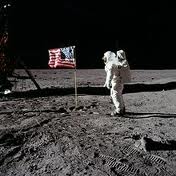
Man on the Moon
Source - en.wikipedia.org
Then our challenge is clear: We need to tell ourselves that we can make water and set ouralves on the journey to figure out a way!
Map of a Genome
Source - life.illinois.edu
Isn't this the same kind of shift in thinking that made it possible for man to walk on the moon? or map the genome of so many species? or accomplish the many other things that define our life today, like the Internet, mobile phones, the Global Positioning System (GPS) and all the other inventions we cannot seem to want to do without.

Metabolic Water
Metabolic water is our name for water that is made inside every living organism from the chemical reactions the organism uses to utilize food it eats.
The average human body produces between 350-400 ml per day of water. This water differs from the freshwater in streams and lakes only in the content of its dissolved substances - the most important of which are dissolved ions. The process of metabolism - oxidation of glucose derived from food - produces this NEW 350-400 ml of water in a day.
Nobody seems to know why the body does not or cannot produce New Water in larger amounts. What the scientific literature does reveal is that the human body is capable, under certain conditions, to produce more metabolic water e.g. when stressed as a result of a rigorous exercise regime
What if we said "we can!"
Do we really and truly know and understand "how" the human body and other living organism's make water from food they eat? If the answer is "yes, we know how" and if we passionately believe that we must find a way to synthetically replicate this process, then we will make the way real!
Biology as Technology
We know of a way! We know of a biological process that makes new freshwater!!!!! ... in quantity.
Biology is the technology that can provide us the way to accomplish what we cannot accomplish through physics or chemistry (see post dated November 2010)

Saturday, February 4, 2012

Water Molecules React to Frequency of Microwaves

A singular property of water molecules is that they get excited (i.e. start moving) when hit with microwaves. Microwave ovens use this knowledge about water to cook food.


Microwaves
Light Waves
Source - chemwiki.ucdavis.edu
Microwaves are light waves with a wavelength of between 1 mm and 1 meter.
They carry a lot less energy than radio waves and are much less lethal than X-rays.
The frequency of microwaves is just right for water molecules, which absorb the energy in microwaves.
This absorption raises the temperature of water. Microwaves can raise water temperature to water's boiling point.
Microwave Ovens
A Microwave Oven
Source - globalmicrowave.org
These ovens raise the temperature of water in the food placed in the oven, and the heated water helps cook the food.
Microwaves are generally not strong enough to raise temperature of food molecules.
Microwave ovens are designed to spread microwaves evenly all over the food so that waves supply energy distributed equally within the volume of an oven.
Unevenly Cooked or Heated food
A common complaint about microwave oven cooking is that the food we heat or cook in it does not heat or cook evenly throughout. 
Water is the cause of uneven heating and cooking.
As microwaves only heat up water molecules, if these water molecules are not evenly dispersed in the food, the food heats up differently in different places, for example:
- Microwaved soup has a hot layer on top and a cold center. The hot layer on top is the result of the uppermost water particles getting heated the most because they absorb much of the microwave energy before the waves can penetrate deeper into the body of the soup.
- Sometimes the middle of food is cooked "first" in a microwave oven because there is a larger concentration of water molecules in the middle of many foods. The moist center heats up first and longer.
- Foods, dry of moisture, like cornflakes rice or pasta are difficult to cook in a microwave because these foods have little moisture that microwaves can heat up.
- Breads get hard in a microwave oven because microwaves evaporates the little moisture contained in bread and, thus, dry the bread into a hard crust.
Invention of the Microwave Oven
Dr Percy Spencer
Source - Gallawa.com
The original name for microwave ovens was Radarange.

An engineer, Dr Percy Spencer, discovered the impact of microwaves while he was developing radar technology that converts electricity into microwaves.
Dr. Spencer's employer, Raytheon, commercialized microwave ovens and sold the first one in 1947.
Today, 90 percent of US homes have a microwave oven.

Saturday, January 28, 2012

Freshwater - A Singular Resource

Singular, according to the American Heritage Dictionary, means "Being only one; individual, Deviating strongly from the norm." Yes, water, and in particular, freshwater is unlike any other resource.


Water is MORE than just another Commodity
Commodities
Source - tradecommodity.com.au
Water is a commodity in the sense that it is a material that can be bought and sold. 
Being basic to all life is what makes water a commodity with a difference.
Not only was water the medium for incubating life, water is also continuously required for sustaining and maintaining life.
We cannot, therefore, just think of buying and selling water - we must also factor in how humans, all other living species and nature's ecosystems are impacted by us moving water around.


Water is Distributed WORLDWIDE
Freshwater Distribution
Source - rusrev.org
Water is the most widely distributed substance on Earth. It is available everywhere. While the specific amount of water differs in different locations, there is no place on Earth with, literally, no water.
All other natural resources are also widely distributed, but each and everyone is not available everywhere even in the smallest of amounts. Some amount of freshwater is available everywhere on Earth.


Water has NO Substitute
There is no other substance, natural or synthetic, that can replace water. It is hoped that the world will migrate away from fossil fuels to renewable energy. No such transition is possible with water.


Water exists simultaneously in multiple forms: Vapor, liquid and solid
3 forms of water
Source - fcwa.org
No other resource exists in more than one form in the same location. Huge amounts of water are also bound into soil and other materials in every location.
Every other resource exists in a single form, usually as a liquid, in the same location.


We cannot MAKE new water
Periodic Table of Elements
Source - elementsdatabase.com
We humans cannot make any element of the periodic table or the basic compounds that combinations of these elements form in nature.
Water formation Equation
Source - scienceforums.net
Making water is a particularly tough proposition because of the amount of energy released. We simply have no way of containing this energy release.


We cannot DESTROY water
When we burn oil, no more oil remains, as the oil disintegrates into different chemical compounds.
Water, on the other hand, does not ever disintegrate into its components. Water gets polluted, changes color, acquires an odor or simply evaporates into the atmosphere or disappears into the ground.


Water is in Constant MOTION
Water Cycle
Source - kidzone.ws
Unlike every other natural resource, water is in constant motion. It is constantly moving between its three forms - from liquid to vapor, from vapor to liquid, from solid to liquid and every other possible transformation. Water is always moving in rivers and churning in lakes and oceans.
NO other natural resource exhibits this perpetual motion behavior. 


Water's Singularity
Water's perpetual motion, it's simultaneous existence in multiple forms, it's availability everywhere and its role as the basis for all life make it singularly unique.


We seem to want to treat water in ways similar to how we think and act with other resources. This may be our greatest error in dealing with water, and especially, finding ways to alleviate water scarcity everywhere on Earth.


We should, instead be looking at harnessing the unique characteristics of water to end water scarcity everywhere on Earth. 

Saturday, January 21, 2012

We Have Never Run Out of Any Natural Resource! (2 of 2)

The Stone Age did not end because we ran out of stones. It ended after 2.5 million years when humans came up with a suitable replacement, known as "metals" and a new age, the Metal Age, began somewhere between 4500 and 2000 BCE. This transition of "ages" is an example of human ingenuity with "science" at its core.
What is Science?
Science
Source - asiasociety.org
Science, to me, is human understanding of something "that is." This something exists and we can explain how it has come about to be. 
Science
Source - dorchesteru3a.wordpress.com
In some cases, our understanding is so detailed that we can also create the "that is" through human action i.e. artificially. 
Applying science - the knowledge that allows us to test and break constraints imposed by nature - has led to our developing innovations like artificial light to eliminate darkness and new seeds to raise yields so that we can alleviate hunger.
Science has been repeatedly used by us to find a way to alleviate scarcity by developing new sources of scarce resources.

Natural Fertilizers (guano) to Chemical Manures
In 1898, Sir William Crookes, incoming president of the British Academy of Sciences, spoke of people dying in large numbers starting in the 1930s. He explained how farmed and re-farmed soil was loosing fertility and how this loss would cut food production unless a synthetic "chemical manure" was quickly available to replenish spent soil. This replenishment, he said, would produce enough food for the world's growing population.
The Haber-Bosch Process
Source - chemwiki.ucdavis.edu
This call motivated many to create chemical manures. Fritz Haber succeeded in discovering a process in 1909 that extracted nitrogen from the air we breathe, to create ammonia, the first synthetic fertilizer.
This discovery and invention of the Haber-Bosh process is in use all over the world today. If it were shut down everywhere in 2012, over 3 billion of the world's 7 billion people would starve to death regardless of their economic and social stature.

Natural to Synthetic Rubber
Malaysia and Indonesia provide much of the world's natural rubber supply. Japan conquered Malaysia and Indonesia in the early years of World War II and stopped exports of natural rubber. This led to a 90% drop in supply of natural rubber, a necessary military ingredient. 
Synthetic Rubber Manufacturing
Source - ame.org
This supply reduction motivated the US government to push and finance development of synthetic rubbers. 
Creation of synthetic rubber was not a new activity. As early as in 1879, Bouchard, a European scientist, had created a form of synthetic rubber. 
The push by the US brought urgency and resources for the creation of synthetic rubber in vast quantities. 
Synthetic rubber turned out to be better than natural rubber in some ways. Synthetic rubber's resistance to high temperatures is so much better than that of natural rubber that natural rubber uses have declined ever since.

Finding New Freshwater Supplies
Freshwater is a near universal solvent, but also exists within much of nature's creations. Our bodies are ~64% water. Water exists "dissolved" in soil, in the atmosphere and many other places. 
Can we use science, in particular, our understanding of 'water' and how it exists everywhere on Earth, to develop new sources of freshwater? 
There is only one way to get the answer! Especially today, the unsafe and audacious act, but the right one on freshwater, is to issue a call for ways to "increase" water supplies, say, by tapping the continuously replenished ocean of freshwater in the atmosphere.

Saturday, January 14, 2012

We have Never Run Out of Any Natural Resource! (1 of 2)

I cannot think of any resource we have ever completely run out of! But the possibility that we may run out of a vital resource scares us to no end. Running out of freshwater is only the latest in a series of scares. Like we have done so many times before, we can rely on human ingenuity to find a way to forever alleviate a perceived or locally-experienced scarcity. One alternate way is to replace what's running out with something totally different.

Whale Oil to Kerosene
Whale Oil
Source - Wikipedia.org
In the mid-19th century, whale oil was the primary fuel for lighting. This "oil" was obtained from the blubber of whales and from the head cavities (not blubber) of the sperm whale. As much as 3 tons of sperm oil could be extracted from large sperm whales.
Whale Oil Lamp
Source - ioffer.com
The typical oil lamp we use today was the oil lamp used to burn whale oil.
As demand grew for whale oil, whale population reduced and whale oil price increased from $200 a barrel in 1983 to nearly $1,500 in 1885. This steep price increase encouraged many individuals to seek an alternative to whale oil. 
Kerosene Drums
Source - hiwtc.com
Canadian geologist Abraham Gesner is credited with developing the way to produce an alternative to whale oil in 1885. He developed the process to distill from bituminous tar, a widely abundant and cheap resource available more commonly than whales, a different kind of oil called Kerosene.
This is the same kerosene we use today to fuel or jet planes.
Scarcity had motivated an individual to innovate a way out of an earlier resource shortage!

Charcoal to Coal
Charcoal
Source - gallerytunsten.com
Charcoal is a fuel produced by heating wood (and other substances) in the absence of oxygen.
Charcoal became scarce in the 17th century when wood use jumped in Europe to meet shipbuilding needs and when forests began to be cleared to produce land for agriculture.
Charcoal prices increased till it was replaced by coal as a primary fuel for heating for a variety of domestic and industrial uses.
Coal is today, the most widely used fossil fuel.
Charcoal continues to be the fuel choice in underdeveloped countries where forests have been decimated by human demand for charcoal for domestic use.
Charcoal's replacement by coal is yet another example of how human ingenuity eradicated a shortage.

Replacement for Water?
Unfortunately, there is no substitute for water and freshwater. So human ingenuity must be applied in a different way. The next post (dated 21 Jan 2012) will address how our reliance on science can help

Saturday, January 7, 2012

Water Is Full of Holes

Water is known as a Universal Solvent, because it dissolves most everything. It can do this because water is full of holes.


Some Liquids have Structure
There are simplistically speaking, two kinds of liquids:
- Unstructured liquids have their molecules held together by relatively weak non-directional Van Del Waals forces. These molecules fill space fairly well. Liquid detergents are an example of a widely used unstructured liquid.
Unstructured Liquid
Source - sites.bergen.org


Structured Liquid
Source - ifm.liu.se
- Structured liquids have their molecules held together by relatively stronger forces that exhibit an orientation or direction (polarity) as hydrogen bonds do in water. These molecules do not fill space well - there are voids throughout these liquids that other materials can fill very well.


Water, a Structured Liquid, has Voids
As is obvious from the illustrations, unstructured liquids have very few voids, while structured liquids have voids. The more (and larger voids) a liquid has, the more molecules (and kinds of molecules) of other materials the liquid can absorb i.e. the more universally solvent the liquid is. 
A large part of the volume of liquid water is made up of voids


Water has voids because of Hydrogen Bonds
Source - science.csustan.edu
Hydrogen bonds, it is assumed, shown as grey lines between the water molecules, create the voids in water. The  water molecule,  which  contains two  hydrogen atoms  and  one  oxygen atom  in  a  nonlinear arrangement, is ideally  suited  to  engage  in  hydrogen bonding