Showing posts with label flood. Show all posts

Saturday, June 29, 2013

Is Any Place FREE from Potential Safe Water Risk?

Water risks come in many forms and if "amount of safe water" is used as a measure, then too-much water (flood) is one extreme while too-little water (drought) is the other extreme. Other measures that define risk are quality, limitations imposed by nature or constraints imposed by a lack of water supply infrastructure.
Flood Risk
Water Risk - Flood Occurrence
Source - http://aqueduct.wri.org/atlas
World Resources Institute's AQUEDUCT Project has mapped the occurrence of floods in the 1985-2011 period. Some interesting observations:
- The Eastern half of the US has experienced many floods; Much of Western Australia has had to cope with floods; Floods seem to cover all of South Asia and the Middle East excluding countries that have predominantly desert landscapes; Mid and Eastern Africa have needed to cope with floods; etc.
Areas free of foods include:
- Mid and south-western US; Much of Canada; Northern regions of Russia and the Scandinavian states; Southern tip of Africa; Midsection of Australia; etc.
Drought Risk
Water Risk - Drought Severity
Source - http://aqueduct.wri.org/atlas
Another map from the AQUEDUCT Project displays drought locations during the 1985-2011 time period. Some conclusions: Australia's midsection and west experience drought; The US west coast and western states are drought prone; Northern and southern Africa have experienced drought frequently; Canada's midsection will see drought as will north and northeastern Russia; The Scandinavian areas free from floods have seeen many droughts; etc
Combining Risk of Flood and Drought
A most interesting and ominous conclusion surfaces when the two maps, flood history and drought history, are superimposed: there seem to be very very few areas where water, as drought or flood, does not pose a hazard to humanity and, also, nature:
- Much of Australia, the US, Africa, Europe, Russia, the Middle East. Canada, etc have been prone to risks from water, either as drought or as flood.

Safe water is a worldwide issue! Very very few of us will not face some form of water insecurity in the near future. We are all in the same boat where safe water is concerned!





Saturday, March 10, 2012

Water Resources impacted by Climate Change?

Implications of climate change on the Earth's Hydrologic Cycle are slowly coming into focus but the underlying phenomenon are still not well understood. Any assessment of climate change impact on water supplies are, thus, only our attempt to err on the 'safe' side for humanity and nature's ecosystems.


The Greenhouse Effect
Source - ucar.edu
If the greenhouse effect can be attributed to a single event, this event happened in 1988. Scientists, seeking to explain a series of unusually warm years, were able to link for the first time in 1988, the increase in atmospheric temperature to the retention of long-wave radiation (received in sunlight) in the atmosphere. Further research linked this increase in retention to an increase in greenhouse gasses that include Carbon dioxide, water vapor, nitrous oxide, methane and chlorofluorocarbons.
(As addition of carbon dioxide fuels increase in all the greenhouse gases, we are developing ways to reduce human carbon dioxide emissions)
Predicting Climate
We all know too well how difficult it still is for us to predict tomorrow's weather. 
Our difficulty is simply due to our lack of understanding on how the vast number of processes and their feedback cycles, come together to make the weather we experience.
Climate Change
As we don't really know how to predict the impacts of climate change, we have developed the approach of trying to understand (and model) historical data on temperature rises and the amount of greenhouse gases in the atmosphere. So, using the historical record as a 'given' we are measuring the increase in amount of greenhouse gases to assess what climate we should expect
Pinpointing Impacts of Climate Change
Climate change is expected to cause rapid changes in temperature, precipitation and concentrations of greenhouse gases (water and Carbon Dioxide). To predict the direction of these changes (i.e. will the result be a flood or a drought?) we make models to represent nature's complex ecosystems. The conclusions we reach are only as good (i.e. as closely representing the functioning of the ecosystem) as the models we can make.
Keeping in mind that our conclusions on the impact of climate change on water resources is only as good as the models we make, 

Rainfall is THE Concern
Source - loadstorm.com
Numerous computer model-based assessments have raised concerns of BIG changes in the amounts of rainfall.
  • In high latitudes areas (in equatorial Africa and Asia, in Southeast Asia) annual rainfall is projected to dramatically increase, while in mid-latitudes and in most subtropical regions rainfall is expected to decrease. 
  • A general reduction in precipitation of snow is expected to reduce the amount and duration of snow cover
Additional implications of reduced or unanticipated rainfall can also be postulated:
  • If we pollute more and more water, less rainfall implies that the concentration of pollutants in our water supply will remain higher longer
  • As we use an enormous volume of water to generate electricity and cool thermal power plants, any reduction in rainfall will only increase pressure on water supplies
  • Current levels of irrigated food production will have inadequate amounts of irrigation water (for example, in the dry US West) leading to reduction in food supplies - some studies predict a drop in USfood production by 30% for a 3 Degree Centigrate increase in air temperature.
  • And ..........
Maybe, the solution is to develop ways to extract both water vapor and carbon dioxide from the atmosphere!!


Saturday, October 1, 2011

Water Needs Thinking on a Massive Scale

The fate of the world in the 21st century is tied closely to the ability to get the right quantity of quality water when and where nature and humans require it. 
The challenge, posed by the daunting variety of solutions required, can only be resolved through thinking on a massive scale.


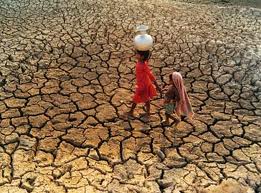
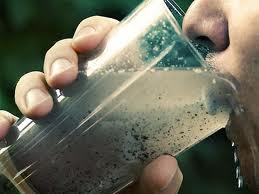
The Challenge's Daunting Variety 
Source - asianews.it
Source - yousaytoo.com

Source - keetsa.com


Usually, we think of water only when we have a problem with either not having enough water or having unsafe water. 


Having too much water is a problem too.


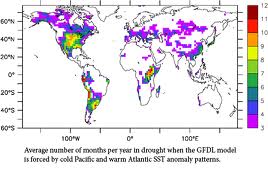
The Challenge's Daunting Geographical Distribution
Source - gfdl.noaa.gov
Source - earthtrends.wri.org
Floods, droughts and unsafe water exist everywhere on Earth. 
Any effort to solve the challenge must recognize these multi-location issues and that if custom solutions are developed and implemented for every location and its specific water issue, water issues will always exist all over the world.


The Solution
Keeping the daunting variety of the challenge in mind, it is necessary and prudent to think of ways to resolve a vast variety of the challenge with the least number of solutions.


Such thinking will invariably turn towards attempts to increase supply from the water-laden air everywhere. Finding a way to extract moisture (both the liquid, but more importantly, the water vapor) from the atmosphere remains the ideal solution.