Showing posts with label water vapor. Show all posts

Saturday, February 15, 2014

Rivers of Freshwater in the air = The Water Internet for Everyone Everywhere?

Latest research by NOAA is clearly revealing that there are Rivers in the atmosphere in numbers and sizes, much like the rivers on land masses.
Rivers in the sky
River that caused Flooding on 16 Feb, 2004
Source - noaanews.noaa.gov
Rivers, whether in the sky or on a land ground mass, produce the same results:
- they cause floods
- they physically change their location over time
- the flow in them varies
- they contain safe drinking water (aka freshwater)
Differences between these rivers are significant:
- We cannot pollute rivers in the sky
- We don't currently know how to dam the rivers in the sky, but are learning how to extract freshwater from the sky rivers on a piecemeal basis.
River causing flood in UK in 2009
Source - newscientist.com
- Rivers on ground hold, carry and deliver liquid water, while rivers in the atmosphere transport water vapor.
Global Rivers in the Air
Two Major Flows of Water Vapor in the Air
Source - baynature.org
Air currents flow, generally speaking, on very standard and predictable paths.

The questions of our day: How can we extract the water vapor that the rivers in the air carry everywhere and hold in some places while discharging in others? Can we make the water laden atmosphere for our local water needs everywhere, what the wireless Internet has become for global communications?
Now, that's a goal worthy of us, in this 21st century!

Saturday, February 18, 2012

Can Motion Assist in Changing Water Vapor Into Liquid Water?

Water differs from every other resource (except, maybe, air) in that water is the only resource that needs motion to maintain its authenticity. Water's need to be in motion is so great that water seems self-driven to move - movement is ingrained in water; talking about water implies talking about something that is always moving.
Still Waters Run Deep
Rocks revealed in a flowing river
Source - alaska-in-pictures.com
Still Water
Source - me.ncrs.usda.org
This proverb commonly means that a person showing a calm exterior should be handled with caution because the calmness does not reveal anything (positive or negative; good or bad; liked or disliked) about that person. This proverb's origin is the observation that moving water reveals a lot about what's in the water while stagnant water does not reveal any information and, thus, anything dangerous will not be known.
Stagnant water
Source - warrencountymosquito.org
Stagnant water holds a severe risk to health of humans. Living hazards (to humans) breed profusely in water that is not in motion.
We seem to be programmed to avoid stagnant water through its impact on our senses: stagnant water is cloudy and we cannot see what's in it; stagnant water has a foul smell; We can also usually see dirt and debris on the surface of a body of stagnant water
Whirlpools
Water never moves in a straight line especially when flowing through narrow paths. Water molecules seem to fight each other to move into the space that a molecule in front of them vacates as it moves forward. 
A top view of a Whirlpool
Source - dailymail.co.uk
This "fight" between water molecules, to move into the vacant space before them, somehow initiates the spinning motion unique to a whirlpool. Whirlpools occur in lakes, in rivers, in virtually every body of water. All that is required is for the water to be moving. This movement most commonly occurs under the influence of gravity.
A Whirlpool as it appears from below
Source - spiralwishingwells.com
And doesn't the underside of a whirlpool look too much like a tornado?
Moving between States
Motion Changes Water between solid,liquid and vapor
Source - rmbel.info
Earth's Water Cycle uses motion to transform water between its three states: solid, liquid and vapor. 


Can we utilize movement to change water vapor in the air we breathe into liquid form whenever and wherever we choose to do so?

Saturday, November 5, 2011

Overcoming Distance is Humanity's Fundamental Freshwater Challenge

Transportation of water to where people have chosen to live or forcing people to live in close proximity to freshwater supplies are two solutions that mankind has practiced ever since the beginning of civilization. This "transportation" issue is still the heart of our current and future freshwater crises.


Places with Meager Freshwater Supplies
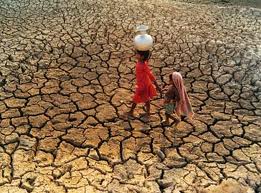
The story and images of women spending their day carting water from sources far, far away from where they live, are well known and publicized as a scourge on the already poor. 
Source - newstimeafrica.com
Source - workworthdoing.com
Innovators have developed devices, like the rolling container that makes water transportation a less physical activity, but does not address the basic issue - the water is far away from where the people who need it are.
Ancient Roman Aqueduct
Source - think2020.tripod.com
In the richer parts of the world the solution to this basic issue is no different, except in scale and institutionalization - the formation of an organization which exists for the sole purpose of supplying needed freshwater.
Source - planetforward.org
Source - spannertech.com


Without such costly and massive creations, most of the population centers in the developed world would also be susceptible to water shortages and supply disruptions.
Covering the distance problem is still the most basic issue behind the supply of freshwater.
Places with Abundant Freshwater Supply
Humanity's Freshwater crisis would disappear in an instant if people lived in locations where there currently exists an abundant natural supply of freshwater and where future freshwater supplies were assured.
Source - worldatlas.com
Unfortunately, however, the two locations with the most freshwater resources (the areas around the North and South Poles) are too inhospitable for long human existence.


And there are no other locations that have necessary freshwater supplies for the existing and future mega-cities that are projected to house nearly 50% of the world's population.


The Distance Eliminating Solutions
The only "local" bodies of freshwater, that can eliminate or, at least, drastically shorten the distance, are the bodies of water located in the "local" air (the atmosphere) and under the ground over which people live. The reality that local underground supplies are already non-existent or under severe stress of becoming extinct, leaves only the option of finding ways to harvest water from the local atmosphere.

Saturday, October 29, 2011

TINY Creatures that Absorb Water Vapor from Air

Source - Wikipedia.org
Crabs, lobsters, crayfish and shrimp all share one physical attribute - they all have external skeletons. This skeleton surrounds nearly all their body organs and protects them from predators.
One structure of their body, pleopods, exists outside their skeleton. 


Pleopods of creatures on land
Source - animalcrossing.wikia.com
Source - derelia.com
Land-living brethren of crabs and lobsters, pill bugs, have succeeded in colonizing land by adapting their pleopods to absorb water vapor from air that is not saturated with moisture.
Pill bugs can loose as much as 30% of their body-moisture and still survive by replenishing this loss by absorbing water vapor in unsaturated air.
Their major loss of body-moisture is through evaporation from the body surface. One of the reasons to roll up into a ball is to reduce the body surface susceptible to promoting evaporation.


Other creatures that absorb water vapor
Flea Larvae
Source - en.wikipedia.org
Book lice
Source - asktheexterminator.com
Silverfish
Source - silverfishbugs.net
Other creatures that absorb water vapor from air are flea larvae, book lice, silverfish, meal worms and ticks.


Why are all of nature's creations that can absorb water vapor from the air, so tiny? Is this a dependency on the amount of water vapor in the atmosphere? Is this a dependency on the size of the water vapor absorbing body structure?

Saturday, October 15, 2011

Oxygen Isotopes and The Water Cycle

Water molecules tagged with different isotopes of oxygen have different tendencies to evaporate and condense.


Isotopes
An Atom
Source - antonine-education.co.uk
 
An element is defined based upon the number of protons contained in its atoms i.e. different elements contain different number of protons in each atom.
With the number of protons being the same, the atoms of an element can contain a different number of neutrons. 
Isotopes are atoms of the same element or compound that differ in the number of neutrons contained in their atoms.


Oxygen Isotopes
8N and 10N Isotopes of Oxygen
Source - mhhe.com
The Oxygen atom has 15 isotopes of which 3 are stable while 12 are unstable (radioactive) with very short half-life. These unstable isotopes have variants, defined on their mode of decay, that increase their number beyond 12.
Stable oxygen Isotopes
Source - web.sahra.arizona.edu
The 3 stable oxygen isotopes have 16, 17 and 18 neutrons in the nucleus of each atom. 
The 16-Neutron isotope is the most abundant - 99.762% of all Oxygen atoms have 16 neutrons in oxygen atoms.


Primary and Secondary Isotopes of Oxygen
The 16-neutron oxygen isotope is known as the primary isotope as it is postulated to have been created by stellar evolution. The 17-neutron and 18-neutron isotopes are called secondary isotopes because their existence requires "seed nuclei" and they are created on earth.


Oxygen Isotopes and the Hydrological Cycle
Isotopes in air, ocean and ice
Source - wwnorton.com
Water molecules are tagged with the different atoms of oxygen. Thus, water molecules can be tagged with oxygen isotopes with either 16 or 17 or 18 neutrons.
Source - eesc.columbia.edu
Glacial ice, the oceans and the vapor in the air, all contain water molecules tagged with the most common 16-neutron isotope. However, concentrations of the 16-neutron isotope are different in ice, oceans and air. This difference is ultimately due to the slightly higher tendency to evaporate, of water molecules tagged with the 16-neutron oxygen isotope.
Oxygen Isotopes and the Water Cycle
Source - web.sahra.arizona.edu
Conversely, there is a slightly higher tendency of water molecules to precipitate (condense) that are tagged with oxygen atoms containing 18 neutrons.
In fact, the different isotopes of oxygen in water molecules seem to influence evaporation and condensation.


Harvesting of moisture (precipitation i.e. rain) contained in air and wind can, thus, be stimulated by the 18-neutron oxygen isotope that can be artificially created. 

Saturday, October 1, 2011

Water Needs Thinking on a Massive Scale

The fate of the world in the 21st century is tied closely to the ability to get the right quantity of quality water when and where nature and humans require it. 
The challenge, posed by the daunting variety of solutions required, can only be resolved through thinking on a massive scale.


The Challenge's Daunting Variety 
Source - asianews.it
Source - yousaytoo.com

Source - keetsa.com


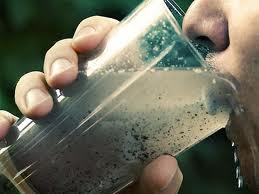
Usually, we think of water only when we have a problem with either not having enough water or having unsafe water. 


Having too much water is a problem too.


The Challenge's Daunting Geographical Distribution
Source - gfdl.noaa.gov
Source - earthtrends.wri.org
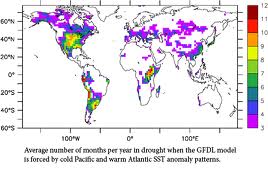
Floods, droughts and unsafe water exist everywhere on Earth. 
Any effort to solve the challenge must recognize these multi-location issues and that if custom solutions are developed and implemented for every location and its specific water issue, water issues will always exist all over the world.


The Solution
Keeping the daunting variety of the challenge in mind, it is necessary and prudent to think of ways to resolve a vast variety of the challenge with the least number of solutions.


Such thinking will invariably turn towards attempts to increase supply from the water-laden air everywhere. Finding a way to extract moisture (both the liquid, but more importantly, the water vapor) from the atmosphere remains the ideal solution.

Saturday, August 6, 2011

Faster & Slower Water Cycles on Earth

The fastest water cycle exists at the Equator. As we move to higher latitudes, the water cycle is slower, in comparison to that at the Equator.


Water Cycle Speed
Source - cotf.edu
The speed of nature's water cycle is defined by the rates of precipitation and evaporation everywhere on Earth.
Source - kentsimmons.uwinnipeg.ca
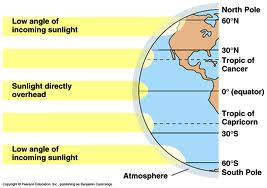
At the equator, the energy of falling sunlight heats water and increases evaporation. As sunlight is strongest at the equator, water bodies located here experience the highest rate of evaporation.
This water vapor moves to higher latitude (in both the upper and the lower hemispheres) and precipitates back to Earth till there is very very little moisture left to precipitate at 30 degrees of latitude (in both the upper and lower hemispheres).
Deserts in white
Source - desertmuseum.org
The precipitation amount and rate is lowest at the 30 degree latitudes. Most of Earth's desert areas lie at the 30 degree latitude mark.
Not all the deserts lie within the 30 degree latitudes as local weather and climatic conditions influence water vapor concentrations in the atmosphere, proximity of land and oceans and other factors influence precipitation with the 30 degree latitudes.

Saturday, July 16, 2011

100 gallons of Water Added into Air Daily by 1 Big Tree

Trees, and all plants do to some extent, recycle some of the rainwater that falls on them rather than let it all flow away


The "Smoke" in Great Smokey Mountains National Park
Smokey Mountains National Park
Source - art.com
The Great Smokey Mountains contain over 187,000 acres of old growth forest - the largest such forest east of the Mississippi. It got its name because, from a distance, this forest-covered range appears to be exhaling plumes of smoke into the sky above it.
But this is not smoke. This forest is usually covered in a mist that is the result of water vapor transpired by the trees and the natural fog created by water-laden air from the Gulf of Mexico that cools rapidly as it moves onto the higher elevations of the Appalachian mountain range.
Scientists estimate that a quarter of the rain that falls on these trees is transpired back into the atmosphere by the forest.


The Amazon Rain Forest
Source - travelblog.com
Trees in the 55 million year-old Amazon Rain Forest cover over 1.4 billion acres.
The forest gets about 9 feet of rain every year.
Scientists estimate that fully half the rainfall is transpired back into the atmosphere by trees of the rain forest. 
Estimates vary widely, but every canopy tree in the rain forest is estimated to transpires more than 00 gallons of water every day, during the growing season - this translates into adding over 10,000 gallons of water transpired into the atmosphere over the course of a summer from ONE tree.

Saturday, July 9, 2011

Global Warming Increases the Ocean in the Atmosphere

Increased water-holding capacity of the atmosphere and increased evaporation are together expected to increase the amount of water in the atmosphere.


Source - SuperStock.com
(1598R‑241586)
Water-Holding Capacity of the Atmosphere
On average, 2-3% of the molecules in the air are water molecules, with a maximum possible of 4% in warm and humid tropical locations.
However, as temperatures increase water vapor volume can exceed 4%, like in the inside of a boiling tea kettle.
Climate models, Earth-system science and satellite observations all conclude that as carbon dioxide levels increase, the air will heat up and water vapor volume in the air will increase beyond the maximum of 4%. 


Surface Evaporation
Evaporation is a continuous surface phenomenon that maintains an equilibrium between molecules leaving a water surface as vapor and vapor molecules being added to a water surface as liquid. As higher temperature implies more kinetic energy, there is more evaporation at higher temperatures


7% vs. 1-3% increase in water fluxes
Atmospheric studies and Earth System Science predict that for every degree Kelvin increase in surface water temperature, the ocean of water in the atmosphere will increase by 7%, while precipitation will increase between 1% and 3% - Source: Science, Vol 317, pages 233-235

Saturday, July 2, 2011

Planes may increase Precipitation

Motion through clouds can expand air and, through this expansion, the air is cooled to such a low temperature that vapor condenses to liquid and even forms ice crystals.


Water Droplets seen in Clouds That Planes Penetrated

Source - http://www.youtube.com/watch?v=pYWAR2OiiNg&feature=mfu_in_order&list=UL


As reported in the LA Times (2 July 2009 issue), a study has been completed by the National Center for Atmospheric Research in Boulder, Colorado, that links planes to precipitation.
The study focused on satellite images taken over a four-hour period of a cloud layer over Texas. The images revealed a series of holes and canals in the cloud layer, that upon analysis, were shown to be made up primarily of liquid water droplets.
Scientists measured the holes and canals, and through a review of FAA records, identified a full array of aircraft that were involved.


Expanding Air Enables Flight and Condensation
Computer models built as part of the study showed that the very same mechanisms that keep airplane aloft had cooled the air to the extent necessary to condense water vapor. Cooling of air was the result of ambient air being forced to expand around propeller tips and over a jet wing.


Condensation Nuclei NOT Needed
Typically, an increase in collisions between water vapor molecules and condensation nuclei is required to convert vapor molecules to liquid molecules. But, as this research shows, rapid air expansion by motion of airplanes can produce precipitation without requiring condensation nuclei.

Saturday, June 11, 2011

Our Regular, Renewable Freshwater Supply comes from the Air

Net daily precipitation of water vapor from the atmosphere is like a "river" from the world's Oceans to land. This 'river' delivers between 40,000 - 47,000 cubic km of freshwater, on average, every year forever.


Rivers seed and sustain life
Rivers are known by two attributes, their length and the amount of water they carry. 
Although the terrain for every river is vastly different, a river performs a function critical to life i. e. it continues to supply freshwater for humans and other living creatures, including, plants and nature's ecosystems.
This is one reason why all early human populations, everywhere in the world, began and multiplied on banks of a river.


Our Renewable Water Supply = 40,000-47,000 cubic km per year
Rain Cloud
Source - ed101.bu.edu
The vast ocean of water that exists in the Earth's atmosphere regularly delivers a river of water to land masses on Earth.
Discounting evaporation from land, net precipitation of water vapor in the form of dew, rain, snow, floods, hail, etc. delivers 40,000-47,000 cubic km of freshwater, on average, every year.
As long as the Sun continues to power the Earth's Hydrologic Cycle, this supply will continue.


Supply distribution is Uneven
Like rivers, however, this supply is not uniformally distributed on all the land mass on Earth or where people and living things congregate.
Also, it does not arrive on a schedule we can bank on. Should this be a problem in the Age of Humans?


The Age of Humans
It is now widely recognized that we humans have shaped the Earth to our preferences with so wide and deep an impact that we now play a very significant (some say predominant) role in 90% of the ecosystems that exist on Earth. The climate crisis is just one BIG example of our impact.
In this Age, is it not possible for humans to intensify and speed-up nature's evaporation-precipitation cycle to the advantage of all ecosystems and life on Earth, including our own?

Saturday, June 4, 2011

There's a Freshwater Ocean in the Air!

The global elemental water cycle (aka The Hydrologic Cycle) stores about 3.43 million billion US gallons of freshwater in the atmosphere at any point in time and precipitates the equivalent of 13 million billion US gallons of water on land every year


Our Sun is the Primary Driver of the Water Cycle
The Sun
Source - science.nationalgeographic.com
Freshwater in the atmosphere is water evaporated from land and oceans by the energy contained in sunlight.
Sunlight heats water on land and oceans causing some of it to evaporate into the atmosphere. 
Sunlight also creates air currents that raise the evaporated water vapor higher in the atmosphere and moves the water vapor using wind all over the globe.


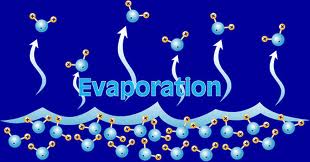
Water Evaporation into the Air
Evaporation
Source - aboutcivil.com
Between 496,000 and 460,000 cubic kilometers of water evaporates every year into the atmosphere. 
Of this amount 70,000 -73,000 evaporates from land while 390,000-423,000 evaporates from the oceans every year.
Evaporation adds between 1,359 and 1,260 cubic km daily into the air = the addition of 358,800 - 332,700 billion US gallons of water a day
References:
Principles and Applications of Aquatic Chemistry,By François Morel, Janet G. Hering
Industry, Fresh Water and Sustainable Development, WBCSD & UNEP, 1998Water - Facts & Trends - Ver 2, World Business Council for Sustainable Development

Saturday, May 21, 2011

Water Helps Us "see" Air

Just like fish are unaware of the water they live in, we humans take our atmosphere for granted. However, water in the atmosphere periodically reminds us of air's existence especially when there is no wind that we can feel


Water droplets in the atmosphere
Source - nationalgeographic.com
Clouds are water droplets and ice crystals suspended in the air. 
Water vapor condenses to liquid form when the air becomes saturated and condensation nuclei are available to catalyze condensation.
The two common ways for saturation to produce clouds are:
  • Add moisture to the air through evaporation
  • Cool the air to its dew point

Artificial Clouds
Source - Wikipedia.org
Source - skystef.be
Carbon-dioxide and water vapor are the primary products of hydrocarbon combustion. 
Contrails, visible condensation trails, are formed behind aircraft when water vapor in the air and/or in engine exhaust condense. 
Contrails are more visible at higher altitudes where the temperature is low (-40 degrees) and where the reduction in pressure behind an airplane cools water vapor that can condense onto particulates in the exhaust.

Seeing our Breath
Source - sixmartinis.blogspot.com
On a cold day, we can "see our breath" because we exhale water vapor that becomes chilled to the point where the vapor condenses into a fog before our eyes.

Saturday, May 14, 2011

Song and Dance for Raindrops - Superstition or Science?

Many human communities have a long-standing belief that song and dance can deliver raindrops from the gods.


Nucleation of vapor into liquid droplets
Air may be under-saturated, saturated or super-saturated with water vapor. As 2% of the moisture in the air is always in the liquid state, the 98% of water in vapor form comes into occasional contact with water droplets in the air.
Thermodynamically speaking, both the under-saturated and the saturated conditions are stable, in the sense that the vapor and liquid states continue to coexist indefinitely unless a physical disturbance occurs. 
The super-saturated condition, however, is thermodynamically unstable i.e. the excess vapor in the air is actively wanting to exit from the air and is prone to doing so in liquid water form. In fact, if the super-saturated vapor comes into contact with liquid water droplets and continues to stay in contact for less than a second, this vapor condenses immediately to grow the liquid droplet.


Song and Dance create motion in air
Loud continuous sounds cause air to move (as sound waves cause tiny movements in the air) as does dancing that moves air in chunks the size of our human bodies. The net amount of physical movement of air is, of course, dependent upon the pitch and duration of the sounds we make and the intensity and continuity of our physical movement.
It is thermodynamically proven that on a cool still night, when air is saturated or super-saturated with water vapor, when this air contains water droplets of a critical size, the right intensity and continuity of sound and human body movement can condense water vapor into fog that eventually turns into liquid rain.


This use of sounds to produce rain is also documented in the rain dances in Africa and the use of yelling in the Yunan mountains of China.

Saturday, April 30, 2011

Extracting freshwater from the air is the only way to meet all our freshwater needs

The Earth has a finite amount freshwater and nature has made sure that we do not run out of it. We can waste freshwater, contaminate it and misuse it but we cannot destroy even a drop of it. All we can do and have done is tap its supply to the extent that our demand exceeds nature's freshwater supply.  


The Water Cycle
The Hydrological Cycle
Source - Britannica.com
Known in scientific circles as the Hydrological Cycle, this cycle continuously delivers freshwater into the atmosphere, rivers, streams, lakes and underground aquifers. This renewing supply is a continuous one and mankind has developed ways to extract freshwater from every source except the atmosphere. 


Freshwater in the atmosphere
There are approximately 10.5 billion acre-feet of freshwater in the atmosphere.
2% of this freshwater exists as liquid droplets while 98% exists as water vapor. 
The freshwater in the air is more than 6 times the freshwater in all the rivers in the world.


Mankind is appropriating 54% of all Freshwater from traditional sources
Source - unwater.org
At the global level, 70% of the freshwater is used for agriculture, 22% by industry and 8% by people for drinking, cooking, sanitation etc.
At a population of 6 billion, mankind is appropriating 54% of all the freshwater in rivers, lakes and underground aquifers.
Our freshwater use has grown at a rate that is twice the rate of population growth. Thus, if these rates of increase continue, when the human population hits 9 billion in 2050, we will be appropriating more than 81% of all the freshwater in all the rivers, lakes and underground aquifers.


Difficult Choices
Thus, we have, simply speaking, just two options:
- Dramatically reduce the amount of freshwater we use, or
- Create or open up a new supply source for freshwater


This blog's efforts are focussed on tapping Nature's hydrological cycle at its freshwater source - the atmosphere.

Saturday, April 23, 2011

Tears of Wine

Wine, a mixture of water and ethanol (a type of alcohol), exhibits a phenomenon that could be a part of the process to extract water vapor from air.


What is Air?
Air, is the name we have given to the atmosphere that is closest to the ground that contains a mixture (not chemical compound) of gases and water (in vapor, liquid and ice crystal form) that sustain and promote life, as we know it, on planet Earth.

Drops & Rivulets in a glass of wine
Source- www.monashscientific.com
Tears of Wine
Mixtures, that are physical and not chemical in nature, contain interfaces between the mixed materials. An example can be found by looking up in the air (an exaggerated one, I admit) - an interface exists between a cloud and the air around it. 
When an interface exists between materials that have very different surface tension forces, mass transfer occurs along their interface. 
The amount of mass transfer is impacted by a number of factors that include, amongst others,  the differing surface tension forces, temperature, pressure and evaporation rates.
This effect can be clearly seen in a glass of wine, in the formation of drops and rivulets on the insides of the glass surface above the wine surface.
Drops and rivulets in a wine glass
Source - newzstuff.blogspot.com
These drops and rivulets are the result of the different surface tensions of water and ethanol that constitute wine, and the fact that ethanol evaporates much faster than water does.
The scientific name for this phenomenon is: The Marangoni Effect.
In wine, as water and alcohol are not mixed completely homogeneously, different regions exist with different concentrations of water and of alcohol. 
In regions, where concentration of alcohol is greater, this alcohol pulls on the regions around it (where water concentration is greater) because the surface tension of alcohol is greater than the surface tension of water. The primary result is a movement of water away from alcohol and an increase in the separation between alcohol and water.
Moving a glass or
holding it at an angle
Source - 123rf.com
While this phenomenon was discovered and explained in the 1850s and 1860s, wine drinkers just know that they need to continuously move the wine glass in a circular pattern of motion to make the wine taste consistent and the one they had when the wine was pored from a freshly uncorked bottle.
This circular motion is really only focused on creating a more homogeneous mixture of alcohol and water. 
This motion does encourage increase in alcohol evaporation, and increased aeration (detrimental to taste and aroma?) but, hopefully, the wine is consumed before too much alcohol evaporates or too much air gets added to the mixture of water and alcohol.
Surface Tension Values Between Water and Air

Surface Tension 
InterfaceTemperaturemilliNewtons per meter
γ in (mN·m–1)
Water - air20 °C72.86±0.05[1]
Water - air21.5 °C72.75
Water - air25 °C71.99±0.05[1]