Showing posts with label raindrops. Show all posts

Saturday, August 27, 2011

Who Owns the Water in the Atmosphere?


I would have guessed that we all "own" the water in the air, just like we "own" the air we breathe. Closer scrutiny of this ownership, however, reveals that we are in, pardon the pun, uncharted waters.


Water Rights
Owning a cloud
Source-nicholsoncartoons.com.au
Water laws enable individuals and companies and others to buy water from a particular source like, a stream or river, a well or a pond or groundwater below a certain location.
Under these laws any activity that tampers and reduces water amounts or flows is tantamount to having violated some one's water rights.
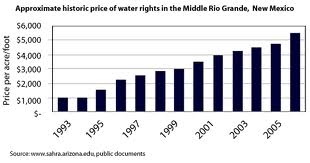
As human populations and the land for agriculture have grown over time, so have the cost of water rights. 
Source - seekingalpha.com
Today, much of the water on land is spoken for. 


Rain Water Harvesting
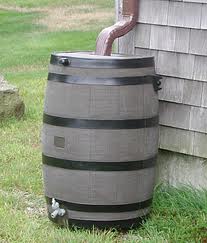
Catching rainwater and storing it for later use, can be interpreted as not allowing the rainwater to enter into the ground or a nearby stream and, thus, interfering with someone downstream who owns the flow from that stream.
Diverting rainwater into a barrel was illegal in Colorado till mid-2009, when the State Legislature approved the capture of rainwater by individuals whose homes are in rural areas not supplied through a water municipality.
Other states are also currently looking into ways to support water rights in an era of water supply shortages. US states in the arid southwest have already loosened up laws to allow rainwater collection and reuse.

Saturday, May 14, 2011

Song and Dance for Raindrops - Superstition or Science?

Many human communities have a long-standing belief that song and dance can deliver raindrops from the gods.


Nucleation of vapor into liquid droplets
Air may be under-saturated, saturated or super-saturated with water vapor. As 2% of the moisture in the air is always in the liquid state, the 98% of water in vapor form comes into occasional contact with water droplets in the air.
Thermodynamically speaking, both the under-saturated and the saturated conditions are stable, in the sense that the vapor and liquid states continue to coexist indefinitely unless a physical disturbance occurs. 
The super-saturated condition, however, is thermodynamically unstable i.e. the excess vapor in the air is actively wanting to exit from the air and is prone to doing so in liquid water form. In fact, if the super-saturated vapor comes into contact with liquid water droplets and continues to stay in contact for less than a second, this vapor condenses immediately to grow the liquid droplet.


Song and Dance create motion in air
Loud continuous sounds cause air to move (as sound waves cause tiny movements in the air) as does dancing that moves air in chunks the size of our human bodies. The net amount of physical movement of air is, of course, dependent upon the pitch and duration of the sounds we make and the intensity and continuity of our physical movement.
It is thermodynamically proven that on a cool still night, when air is saturated or super-saturated with water vapor, when this air contains water droplets of a critical size, the right intensity and continuity of sound and human body movement can condense water vapor into fog that eventually turns into liquid rain.


This use of sounds to produce rain is also documented in the rain dances in Africa and the use of yelling in the Yunan mountains of China.

Saturday, April 16, 2011

A Water Drop is Usually a Sphere but Never Shaped like a Tear-Drop

The shape of a "free" drop (or droplet) of water varies with the volume contained in the drop but is never shaped like a "tear-drop" that we are all familiar with and use to represent water.

Possible Source of the Tear-drop Shape
Common Representation of a water drop
Source - free.clipartof.com
The widely recognized representation of a water drop, in the shape of a tear-drop (shown on the right) simply does not exist except in our mind's eye. This shape probably originated from our observation of the appearance of water clinging to a surface or immediately before dropping from a surface (like a dripping tap). 
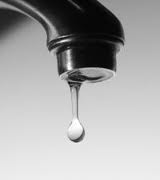
Water dripping from a Tap
Source - head-first.co.u
k
Tiny drops of water
Source- Photography-on-the-ne
t
The Primary Shape of a Water Drop is a Sphere
Water drops, smaller than 2 mm in size, take the shape of a perfect sphere. 
The drop takes this shape as a sphere is the geometric shape that has the smallest surface area for a given volume (see April 9, 2011 post). 
Also, the mass of water contained in a drop of this small size does not experience enough gravitational force for the shape to be impacted significantly. Simply speaking, the gravitational force is much less than the force of the Hydrogen Bonds in a drop of water.


The Shape of Raindrops depends on the size of the drop
Shapes of Raindrops of fifferent size
Source - http://en.wikipedia.org/wiki/Drop_(liquid)
As raindrops fall through the air they experience resistance from the air. This resistance is larger for larger drops and is insignificant, like the force of gravity, on drops less than 2mm in size.
As raindrop size grows,however, from the  combination of individual raindrops, the air resistance and gravity increase till they force the breakup of the large raindrops into smaller raindrops. These smaller raindrops again start exhibiting the spherical shape and combine into larger drops once again. This process of starting with tiny drops that combine to form larger drops which then break up into smaller drops, only stops when  raindrops reach the ground or some structure on the ground.