Ocean-water dependent species and ecosystems have two luxuries that freshwater-dependent species and ecosystems lack:
- Ocean-water exists in one BIG connected mass distributed all over the world. Freshwater exists in multiple locations all over the world
- Ocean-water exists mostly in just one form: as a liquid; Freshwater, however, exists in vapor (e.g. as a gas), liquid and solid (e.g. as ice) form
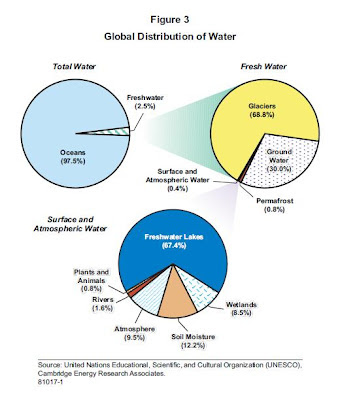 Global Distribution of Water
Water covers much of the Earth's surface:
- Ocean-water is the predominant (97.5% of the total) variety.
- Just 2.5% of the total water on Earth is freshwater.
Freshwater Locations
Ignoring movement of freshwater between various deposits of freshwater on Earth, Freshwater exists in 8 locations:
- In glaciers as ice and in liquid form
- As groundwater in underground aquifers
- In Freshwater lakes
- In wetlands
- Dissolved in soil
- Suspended in the atmosphere
- In flowing rivers, and
- In plants and animals
Historical Sources of Freshwater
There are two types of sources that humankind has tapped for its freshwater needs:
A. Freshwater Bodies
Freshwater lakes, wetlands and rivers were humankind's earliest sources of water. These sources are still major sources of freshwater because they are continuously replenished. We may choose to extract freshwater at rates greater than the replenishment rate, but that is another subject.
Plants were probably a major source of freshwater for humanity, because all food contains freshwater. With the harnessing of agriculture (about 10,000 years ago) and the resulting improvement in diet, humans get a lot of their required freshwater from the food they eat and digest.
B. Water moving between bodies of freshwater
While all water is always in continuous motion, Evaporation and condensation are the primary ways freshwater moves between different freshwater bodies.
Tapping New Sources of Freshwater
Of the 8 freshwater bodies, the single ocean-water body and the ways water moves between these bodies, there are only 6 possible new sources of freshwater:
1. The freshwater in the atmosphere is nearly 5 times MORE than the freshwater in all the rivers on Earth.
2. The freshwater in soil is nearly 6.6 times MORE than the freshwater in all the rivers
3. The freshwater in plants and animals
4. Artificially converting seawater into freshwater i.e. desalination.
5. Making freshwater from scratch - our bodies make between 300 and 400 ml of freshwater per day through the biological process of metabolism - hence our name for this water is "metabolic water"
6. Catching freshwater as it moves from one source to another - Rainfall is the predominant such source.
Increasing Freshwater Supplies
In addition to the above 6 choices, there exists, of course, the option to use less water by recycling used water, increasing water use efficiency and reducing the amount of water that is wasted.
The Task Before Us
Which of the above 6 "new sources" of freshwater and using less water should we focus on and why?
- Ocean-water exists in one BIG connected mass distributed all over the world. Freshwater exists in multiple locations all over the world
- Ocean-water exists mostly in just one form: as a liquid; Freshwater, however, exists in vapor (e.g. as a gas), liquid and solid (e.g. as ice) form
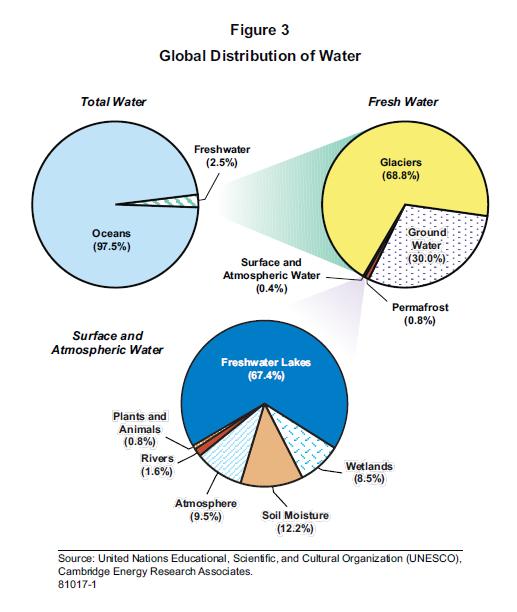
Water covers much of the Earth's surface:
- Ocean-water is the predominant (97.5% of the total) variety.
- Just 2.5% of the total water on Earth is freshwater.
Freshwater Locations
Ignoring movement of freshwater between various deposits of freshwater on Earth, Freshwater exists in 8 locations:
- In glaciers as ice and in liquid form
- As groundwater in underground aquifers
- In Freshwater lakes
- In wetlands
- Dissolved in soil
- Suspended in the atmosphere
- In flowing rivers, and
- In plants and animals
Historical Sources of Freshwater
There are two types of sources that humankind has tapped for its freshwater needs:
A. Freshwater Bodies
Freshwater lakes, wetlands and rivers were humankind's earliest sources of water. These sources are still major sources of freshwater because they are continuously replenished. We may choose to extract freshwater at rates greater than the replenishment rate, but that is another subject.
Plants were probably a major source of freshwater for humanity, because all food contains freshwater. With the harnessing of agriculture (about 10,000 years ago) and the resulting improvement in diet, humans get a lot of their required freshwater from the food they eat and digest.
B. Water moving between bodies of freshwater
While all water is always in continuous motion, Evaporation and condensation are the primary ways freshwater moves between different freshwater bodies.
Tapping New Sources of Freshwater
Of the 8 freshwater bodies, the single ocean-water body and the ways water moves between these bodies, there are only 6 possible new sources of freshwater:
1. The freshwater in the atmosphere is nearly 5 times MORE than the freshwater in all the rivers on Earth.
2. The freshwater in soil is nearly 6.6 times MORE than the freshwater in all the rivers
3. The freshwater in plants and animals
4. Artificially converting seawater into freshwater i.e. desalination.
5. Making freshwater from scratch - our bodies make between 300 and 400 ml of freshwater per day through the biological process of metabolism - hence our name for this water is "metabolic water"
6. Catching freshwater as it moves from one source to another - Rainfall is the predominant such source.
Increasing Freshwater Supplies
In addition to the above 6 choices, there exists, of course, the option to use less water by recycling used water, increasing water use efficiency and reducing the amount of water that is wasted.
The Task Before Us
Which of the above 6 "new sources" of freshwater and using less water should we focus on and why?


