Saturday, March 26, 2011

We Use Water's Unusual Properties To Our Advantage

Dry air is heavier (more dense) than wet air, because water vapor is lighter (less dense) than air. We creatively utilize our knowledge of air density, that is also a function of temperature and pressure, to our advantage.


Baseballs Travel Further in Denver

 
The lower the air pressure, the less dense the air and the less the number of molecules in a unit of air. Thus,  a baseball (or any moving object) experiences less resistance (or drag) to its motion and ends up travelling a longer distance in air of less density.
Source - USAtoday.com
The baseball goes further as the reduced molecules in the air reduce the rate at which its speed slows.
This same effect is seen, but somewhat less obviously when the amount of water vapor increases in the air. Baseballs travel further in moist air where increase in the amount of water vapor reduces the number of molecules subjecting the baseball to resistance.


Indy 500 cars are designed with weather in mind
Source - farcaronline.blogspot.com
Dry dense air also slows a race car. But as high speed is a mandatory requirement, race cars are designed to take advantage of the drag produced by different weather conditions.
Simply speaking, the Indy 500 cars are designed to accept the drag to better hug the track i.e. make the drag push the car onto the track. 
While driving skills are of paramount importance, it is these design modifications that allow a race car to take a turn at 115 mph (without sliding off the track) instead of a slow 70 mph to win the Indianapolis 500.
The driver and pit crew cannot, of course, change the amount of water vapor in the air (humidity) or adjust the atmospheric pressure over the race track. 
All they know is the air temperature and how it is forecast to change while the race is being run. The design allows them to make adjustments to their car that will allow the driver to race with the optimum drag and, hopefully, win the race. 


NASCAR reduces drag with Nitrogen
Source - Nascar.com
Nascar races are run with stock cars - cars we all drive on city streets but strengthened a bit to accommodate more lethal accidents than those we expect during our drives. 
Nascar's solution to reduce air resistance, because they cannot make body design changes, is to use Nitrogen instead of air to inflate the tires of their cars. 
Nitrogen eliminates the small amount of water vapor that exists inside a tire filled with air. As the tire heats up, the water vapor increases the internal pressure in a tire and introduces instabilities that have greater impacts at higher speeds, reduces gas mileage, increases tire wear and reduces tire life. Nitrogen does not display any such negative characteristics.


NASCAR's solution is so appealing that many of us city drivers are starting to fill the tires of our cars with Nitrogen.

Saturday, March 19, 2011

Trees are Tall Because Water Can Move Against Gravity

Source - USDA Forest Service
The Sequoia Sempervirens (commonly known as The California Redwood) tree species has the tallest tree in the world, reaching a height of 379.1 feet. This height, a bit short of the estimated 430 feet maximum possible height for a tree, is the result of the tree's ability to develop an internal structure that water can use to rise from tree roots to the topmost leaves of the tree.


Water Molecule
Source- H2O_molecule_scheme_of_dipole.png‎
The unique shape of the water molecule, the shape that makes the water molecule a "polar" molecule, is used by the tree to design its internal water supply system that moves water up the tree. Simply speaking, water moves up the tree because it is "attracted" to the sides of the channels that the tree has created in its internal structure.


Capillary Action
Source - davidnelson.md.
Capillary action is the phenomenon that raises water molecules closest to a vertical surface (of the sides of a tube) because the attraction between the water molecules and the surface material molecules is high and the tube is so small that the water in the tube is unable to form a water surface, as shown on the right. 
When there is a very very tiny or no water surface, then the condition exists (called Capillary action) that all the water  molecules on the surface are "pulled up" and water rises against gravity.
Water in a narrow tube continues to rise due to capillary action, till the forces of attraction (between the water molecules and molecules of the wall material) are able to support the column of water that is formed in the tube. Measurement of this attraction force and calculations of water weight have shown that the maximum height that capillary action can transport water, against the force of gravity, is about 430 feet. So no tree can be taller than 430 feet in height. 


Capillary action is also behind the ability of water to move through soil from high humidity locations to low humidity locations.


Tree Leaves & Branches Are Smallest at the top
Source-hollowcreektreefarm.com
In especially tall trees, the number of branches, the length of a branch, the number of leaves and the size of a leaf all reduce as the height increases. 
These differences with height are due to the amount of water that the tree has available at different heights. As less water is available at greater heights, there is less need for longer branches, lots of leaves and leaves of larger sizes, because transpiration needs are less at greater heights. 
This reducing volume of water with height, produces the typical conical shape of trees.

Saturday, March 12, 2011

Water Vapor Permeability

Source -Diffanimals.com
Just like birds of a feather flock together, water is attracted to some surfaces and very little to others. Extracting water, that exists in both vapor and liquid form, from air can, thus, be facilitated either by choosing a naturally-available surface that attracts water droplets and vapor molecules, or by installing a nano substrate, that promotes moisture adsorption and/or absorption, onto the surface. Once water molecules arrive at the surface, one of two situations exist: Either the surface undergoes a transformation (that may be permanent or temporary) or the surface undergoes no transformation. The energy requirements to collect the water from these different surfaces are different. 


Water Vapor Permeability (WVP)
Source - CopyrightFreeImages.com
WVP is the rate of water vapor transmission per unit area per unit of vapor pressure differential.  If a water drop on a leaf stays as a drop the WVP of the leaf is near zero. Such a situation occurs when the attraction between water molecules is very much greater than the attraction between water molecules and the molecules at the surface of the leaf that come into contact with the water molecules. 
Source - psrc.usm.edu


Many novel membranes have been created that are almost impermeable to air but are permeable to water vapor. 


Nafion, a Dupont product, is one such membrane that is commercially available. Such membranes, which do not permit air to pass through them, but permit passage of water vapor, find important applications in power source, pharmaceutical and biotech industries.


The side of the Nafion membrane that comes in contact with water vapor develops a surface concentration in equilibrium with the vapor. With increase in time, the migration of water vapor occurs along the thickness direction of the membrane. 


Initially, a new dry Nafion membrane is impervious to air and large molecules of water and water vapor. However, once the membrane has been exposed to water vapor, the membrane chemically attracts the vapor and absorbs the vapor. The part of the membrane that absorbs water vapor becomes conducting to the vapor, while the rest of the membrane remains dry and non-conducting. Therefore, vapor transport through the
membrane is zero in the initial stages and gains speed once the moisture concentration on the far side of the membrane becomes greater than zero.

Saturday, March 5, 2011

Water Helps A Gecko Walk On Ceilings With a Small Human Child On Its Back

In the Simpsons Movie, Homer had to hold up his pig upside down, to realize his dream of owning a pig that could imitate a spider and walk on ceilings. He could have realized this dream and  
Source-thesharkguys.com
Gecko climbing the wall.
(Credit: iStockphoto/Luis Carlos Torres)
watched his pig from his favorite couch, if he had only known about nature's ingenious design of the underside of a Gecko's foot.All he really had to do was modify the underside of his pig's feet (to make them similar to the feet nature gave the common household gecko) and add a little moisture to the air in the room. 

Van Der Walls Forces
At the molecular level, all molecules experience some level of attraction. This 
attraction is electrical in nature and arises from the temporary fluctuating dipoles that are created by electron motion. 
A molecule that typically is symmetrical and has no electrical distortion, can exhibit an electrical charge when either a lot of its electrons happen to be in the same area of the molecule or when influenced by another molecule that is exhibiting an electrical charge. This temporary "sloshing around" of electrons creates fluctuating dipoles even in a 'normally' benign molecule.
Source-Labwater.com


And, as one would expect, in the presence of water that exhibits a permanent dipole charge, the molecular attraction is strong, long-lived and nearly permanent.


The Underside of the Gecko's Foot
Different types of geckos have different 'looking feet' but they all share a common characteristic - they can all interact with all kinds of surfaces at the molecular level and use this molecular attraction to scamper up walls and run around on the ceiling.
Different Gecko Foot Designs
Source-geckolab.lclark.edu 
Gecko Foot Hairs & Strands
Source-Sciencephoto.com
Each toe of a gecko's foot contains hundreds of pad like ridges. On each ridge are millions of hairs that each divide, at their ends, into smaller strands. These strands are so tiny that the molecules at their ends interact with the molecules of the surface the gecko is walking on. The presence of even minuscule amounts of water strengthens these attractive bonds between the gecko's strands and the surface. Maybe, this is why, the Gecko population surges after a monsoon rain when the moisture in the air makes the gecko most mobile on nearly every kind of surface.
In a laboratory environment, the Van Der Walls attraction forces between a single strand and a surface have been measured to support a weight of up to 200 microNewtons - enough to support an ant. With half a million strands on each foot a little gecko walking with 2 million strands can carry a back-pack weighing 90 lbs - the weight of a small child.
Capillary Contribution of water
Liquid bridges formed by water monolayers. between a surface and the strands under a gecko's foot, further increase the attraction bond (due to Van Der Walls forces) that enables the gecko to scamper up walls and walk on ceilings. This increase in adhesion force significantly increases with increase in surface hydrophilicity and increasing levels of humidity.


Capillary forces will be the subject of a future blog.
The task at hand is to use learning from a gecko's foot to use Van Der Walls forces to attract water molecules in the atmosphere using water molecules resident on a hydrophilic surface.


Saturday, February 26, 2011

Water Vapor Absorption and The Surface Law

Many of nature's crucial processes occur at surfaces. Nutrients, water vapor and other material are exchanged by cells at the surface of each cell. Liquid water evaporates into the air (as water vapor) from the surface of a body of water. Sunlight is absorbed at the surface of the leaf. 


Water vapor absorption and adsorption also requires surfaces. Thus, ignoring efficiency considerations for the moment, a larger amount of water vapor will be absorbed if a larger a surface area is available that is capable of absorbing water vapor.


The Surface Law

A cube with sides of length 's'
Source: tutornext.com
The ability to increase surface area is controlled by the Surface Law that states: As volume of a physical object increases, the object's relative surface area decreases. For example, consider the cube on the right:
  • A cube 1 unit in size (s=1), has volume equal to1 and surface area equal to 6. Its ratio of surface area/volume is 6
  • A cube 2 units in size (s=2), has volume equal to 8 and a surface area equal to 24. Its ratio of surface area/volume is 3
  • A cube 4 units in size (s=4), has a volume equal to 64 and surface area equal to 96. Its ratio of surface area/volume is 1.5 
In the above example, the relative surface area reduces as the volume increases. From a biological perspective, this implies that it is relatively more difficult to supply nutrients to the cells at the center of each cube as the volume of cube increases. As expected, Nature has come up with interesting structures that increase surface area without increasing mass


Tracheal System
source: users.rcn.com. 
This is a grouping of tubes, air sacs and various geometries (such as loops or helices) that continuously bring air to tissues so that the tissues can directly exchange nutrients (oxygen, water vapor, carbon dioxide, etc) from the air.


Pores
Nature invented pores to increase surface area. 

source: the poultrysite.com
The typical chicken egg is perforated by about 10,000 pores (approx 1.5 pores per square millimeter of shell surface) that permit passage of respiratory gases and water vapor through the hard shell.


The pore size (17 micro-mm) has been optimized to provide the large amount of oxygen required just prior to hatching.


The Human Respiratory System
Source: Goldiesroom.org


As body size increases, the complexity of providing enough surface area to all the tissues and cells in the body increases.

  • Oxygen is extracted from the air we breathe at the surfaces of miniature air sacs (alveoli) in the lungs
  • This oxygen diffuses from the blood into a cell at the surface of a capillary

The human system to move oxygen into the body and remove carbon dioxide from the human body increases in complexity by creating new surface areas with specialized functionality that feeds nutrients to cells and extracts waste for disposal.


A Gram with Surface Area of 2 Basketball Courts
Source: physorg.com
MOF-74 is a porous crystalline powder developed at the University of California in Los Angeles that resembles a series of tightly packed straws comprised of mostly carbon atoms (white balls) with columns of zinc ions (blue balls) running down the walls.


The green balls are hydrogen molecules that this design is optimized for.


A gram of MOF-74 has the surface area of 2 basketball courts


Many many more examples exist of structures created by nature and mankind for supplying cells with nutrients and removing waste. So what would a structure look like that presents enough surface area to withdraw water vapor from unsaturated air?

Saturday, February 19, 2011

Nature's Creations Absorb Water Vapor From Air

98% of the water in the atmosphere exists in vapor form. While most living creatures must forage for liquid water on a regular basis, Nature has equipped some creatures with specialized structures (unique body creations) that enable them to absorb water vapor directly out of unsaturated air. 


Ixodes Ricinus - Ticks
Source:database.portal.modwest.com
Ticks usually get their allowance of needed water from the blood of the creatures they feed on. However, under drought-like conditions, the Ixodes Ricinus tick absorb water vapor from the atmosphere. Ixodes Ricinus tick is unique in that they can satisfy their water need by drinking liquid water and absorbing water vapor
The Desert Cockroach
Source: bugguide.net


The Desert Cockroach, Arenivaga Investigata
This cockroach absorbs water vapor from the unsaturated atmosphere. It has two bladder-like extensions in its mouth-parts that are assumed to accomplish vapor absorption and vapor condensation to liquid form - a form that the cockroach needs for survival.

Firebrat, Thermobia Domestica
Firebrat
Source: www.forestryimages.org
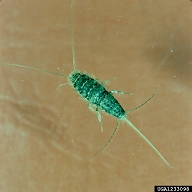
The greatest known concentration of mitochondria is found in the cells of what is believed to be the functionally mature water vapour-absorbing epithelium of the posterior rectal (anal) sacs of the firebrat, Thermobia domestica. Water Vapor Absorption from sub-saturated air down to as low as 43% relative humidity (RH) is essential for the growth, development and survival of the Firebrat in hot, dry environments where liquid drinking water is lacking. (source: Journal of Insect Physiology)


The Mealworm Tenebrio molitor 
mealworm Tenebrio molitor
Source: http://www.ozanimals.com/Insect 
Water gain in several xeric insects, like the Mealworm, is accomplished through absorption of water vapor from the atmosphere. This absorption is predominant at the larvae stage of beetle development and is less predominant in the mature beetle.


Soil-Dwelling Anthropods

SnowBug
Source: http://soils.usda.gov 

Arthropods balance their water budget by actively absorbing water from highly unsaturated atmospheres. This animal maintains its body fluids hyperosmotic to its surroundings so that net water uptake occurs by passive diffusion along the gradient of water potential. The animal's basically manges glucose and myoinositol to effect large increases in osmotic pressure. This allows it to stay active in the same ranges of drought intensity like plants are capable of surviving. 


The above creatures are but a handful of nature's creations that live off water vapor in the atmosphere using  a specialized "condensation sac" and/or managing naturally occurring sugars (glucose) and materials synthesized from sugar e.g. myoinositol.


Do the above creations of nature hold the keys that we can use to guide our development of artificial machines that extract water vapor from the atmosphere? 

Saturday, February 12, 2011

Harvesting Liquid Water in Fog - Part II

Mankind has made significant strides towards harvesting from the 2% of water in the air that exists in liquid form. This progress comes from artificially replicating nature's inventions like the back of the African Stenocara beetle. Other moisture capturing systems are found in nature's designs for the Texas Thorny Devil Lizard, the structure of Cactus thorns and the structure of the leaves of plants like the Welwitschia Mirabilis.

Bio-mimicry & Species Adaptation
Stenocara Beetle
(Image: www.rain-barrel.net)
The Stenocara beetle lives in the Namib Desert in Africa which has endured arid and semi-arid condition for over 55 million years, has less than 5mm of rain annually and is practically barren of vegetation. 

The only other sources of water are underground rivers and morning fog that moves in over the desert near the coast from the ocean. This fog travels at gale speeds a few times a month.

Microscopic Detail
(photo: Oxford University)
An inhabitant of the Namib Desert, the Stenocara Beetle has evolved to harvest the liquid water in the fog through a combination of hydrophilic bumps/ridges and hydrophobic troughs/valleys on its back. 

To survive in the desert, Stenocara evolution has adapted it to catch the liquid water in the fog through a back of unique design . As described in http://www.biomimicryeuropa.org, "The peak of each bump is smooth and attracts water. Tiny rounded nodules, no wider than a human hair, cover the slopes of each bump and the troughs in between. The nodules are coated in a wax-like material, making them hydrophobic. When the fog rolls in, the beetle tilts its body into the wind. The water droplets from the fog are repelled from the nodules but stick to the peaks of the bumps. The droplets grow until they are large enough to roll down from the top of the peaks and are channeled to a spot on the beetle's back that leads straight to its mouth."

Design patent No. PCT/GB02/00067
Zoologists, led by Andrew Parker at Oxford University, discovered this hydrophilic-hydrophobic design and have obtained a design patent on it. Now the pace has quickened to find a commercial way to gain from nature's design of the Stenocara beetle's back.

The MIT Project
Chemical engineer Robert E. Cohen and materials scientist Michael F. Rubner have perfected a film with hydrophilic peaks and hydrophobic runways that extract liquid water from air and possibly go a step further in coalescing water vapor into liquid water. The next frontier is commercialization of this film for common use.

The University of Sydney Project
Australia, a country with few inland water resources, has nearly 90% of its population living in coastal cities. At the University of Sydney, a small team has a large goal - develop a film that can be laid on a large surface (like the side of a building or the roof of a house) that is similar in design to nature's design for the Stenocara's back with the very same water-harvesting functionality that nature has adapted for the survival of Stenocara and the propagation of its species

All this effort for 2% of the water contained in the air! 

Saturday, February 5, 2011

Harvesting Liquid Water in Fog - Part I

The water in the air, at any one time, is more than the water in all the rivers combined. Of this water in the air, 98 percent is in vapor form and just 2 percent is condensed into liquid droplets. These liquid droplets eventually form a cloud and through rain get deposited on the ground. Fog is a cloud which has its cloud base on the ground or just a few feet above ground.


Nature has always been a fog-catcher ... and people took advantage of it
California Redwood Trees (source: travels.com)
The California Redwood tree is highly adapted to harvest water from fog and satisfies the vast majority of its water needs this way. The trees simply stand like a barrier in the way of the fog that intercepts and precipitates the water droplets in the fog.


Water droplets from the fog collect on leaves and branches. grow larger and eventually drip down to the ground and nourish and plants and even create streams that animals and people can use.


On El Hierro, the smallest island of the Canary islands, people collected their only freshwater for thousands of years (till about a 100 years ago) from the leaves of their local trees - The roman author, Pliny The Elder, mentioned the Holy Fountain Tree growing on El Hierro.


In Oman, to capture water from the fog, there is a long tradition of farmers and breeders putting cisterns under agave, olive, laurel and juniper trees to collect  water dripping off their leaves and branches.

Fog Nets in Bellavista (Source: National Geographic.com)
In the hillside village called Bellavista, outside Lima city, the locals have put up 26-foot long plastic netting that capture fine droplets of water in the air, that eventually clump into large enough drops that fall to the ground and through pipes are collected in two underground tanks. The water that is not collected nourishes 700 trees that have been planted to reforest the landscape that logging wiped out years ago.


The residents of Bellavista are hopeful they will be as successful as Charles Darwin was when he planted seedlings, brought from botanic gardens in London, to make Ascension Island habitable, in the 1800s, for British troops stationed there.


Saturday, January 29, 2011

Why Strive to Make Wind and Air a Universal Local Source of Freshwater?

Albert Einstein’s definition of Insanity, “Insanity is doing the same thing over and over again, and expecting different results”, applies well to the mindset with which we continue our attempts to solve the worldwide water crisis. This mindset continues to lay the blame on inadequate commitment and resources and crazy priorities while increasing the volume of the message that catastrophe is imminent.

It’s time we tried something different. It’s time we made a paradigm shift in our thinking and started seeing the forest instead of just the trees! My comprehensive definition of the water crisis is: Not having the right quantity and quality of water where we must have it

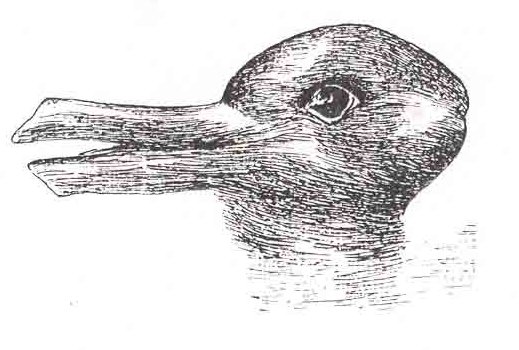
Rabbit … OR … Duck?
Thomas Kuhn, in his book The Structure of Scientific Revolutions, used this illustration to make the point that if we can see things in a different way (i.e. if we can interpret and receive different messages from the same information set) we may be able to do something different.

Simply speaking, once we see things differently, we usually will act differently. But we need to see things differently to ever think of acting differently.

The Elephant and the Blind Men

The illustration tells the story – The blind men (or men in the dark of night) do not agree with each other on what an elephant is, because they only use the single part they have touched as the basis of their opinion of what the elephant is.

Our interpretation of the water crisis is similar to the story of these blind men. We each have seen only the tiniest part of the water crisis and have worked to solve it (with good diligence and worthy results) while we each, in parallel, turn up the volume of our messages of pessimism, catastrophe and a lack of commitment and resources.

THE FULL & BIG Picture

When we define the water crisis as Not having the right quantity and quality of water where we must have it, and look around for a solution, we quickly find that:

1.  Air is a medium that contains freshwater
2.  Air is present everywhere
3.  Air, as Wind, can move water anywhere
4.  Air contains orders of magnitude more freshwater than we will ever need 
5.  Freshwater on the ground is replenished REGULARLY and ONLY through nature’s process of rainfall and precipitation
6.  Nature's Hydrological cycle replenishes freshwater supplies in the air regularly

Isn't it time we worked earnestly to harvest water from the Air and the Wind?


Image sources: http://en.wikipedia.org/wiki/Paradigm_shift; purpleserendipity.wordpress.com


Saturday, January 22, 2011

Can Living Things Make Water?

Making water by combining its components, oxygen and hydrogen, requires a process we know very well from Chemistry textbooks, However, we do not know how to control this process in a way to safely manage the large amount of energy that the process releases. (see post dated November 9, 2010).Aerobic RespirationAll living things (Animals, humans, fungi, algae, bacteria and plants) breathe i.e. take in oxygen from the environment. Their body's biological process breaks down glucose in tissues to release energy.
This process can be over-simplistically described by the following equation:

  Glucose + Oxygen = Carbon Dioxide + Water + Energy

and chemically represented as follows:

   C6H12O6 + 6 O2     →     6 CO2 + 6 H2O  +  Energy

As shown in the above equation, this process creates water as a by-product while releasing energy in the form of ATP (Adenosine Triphosphate)

ATP is the main energy source for cell functions. About 30 molecules of ATP are produced from oxidation of 1 molecule of glucose. Some of the water released hydrolyzes ATP to ADP but the rest remains as water in a cell.

If we could synthetically perform the above, we will be creating water using a biological process that Nature perfected a long long time ago.Of course, the biological process of aerobic Respiration is not as simple as shown above and is better represented as follows:


This is the challenge faced by the emerging science of Synthetic Biology when the task is to replicate, scale up and commercially extract water from the atmosphere.

Image Sources: Solarnavigator.net; library.thinkquest.org, Wikipedia

Saturday, January 15, 2011

Nature's Water Purification Cycle

Water, the source of all life of the kind we know on Earth, is always in movement naturally – it is perpetually moving to a different location and changing its form. The energy source for this continuous never-ending transformation is sunlight.

The Water Cycle

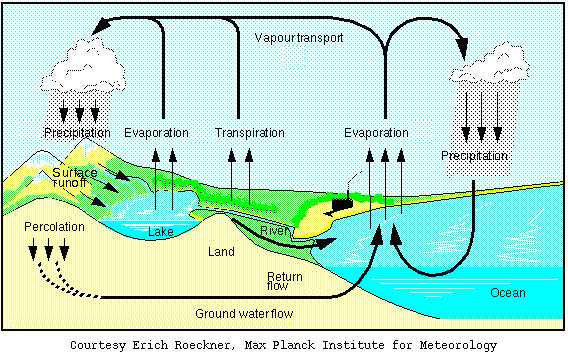
The figure on the right displays Nature's 4-process Water Cycle (also known as the Hydrological cycle).

The four processes are: 
  • Evaporation & Transpiration - this process removes salts and other ingredients from seawater and delivers pure fresh drinking water (as water vapor) into the atmosphere
  • Vapor Transport - this process ensures that the pure fresh drinking water is available everywhere
  • Precipitation (Condensation) - this process deposits the pure drinking water on the ground and facilitates a process called Chemical Weathering that scrubs carbon dioxide from the atmosphere and is part of Nature's Carbon Cycle
  • Surface and ground runoff - this process adds the results of the precipitation process into the Ocean

All of these processes are in various stages of progression at any one time time everywhere around the world.

Drinking Water

Water, fit for consumption by humans, animal, insect and plant life, is available in the atmosphere.

The appropriate name of the Water Cycle is Water Purification Cycle.