Showing posts with label precipitation. Show all posts

Saturday, October 26, 2013

Rising Air Delivers Precipitation!

Precipitation of moisture in the air is the primary way that new safe water is delivered everywhere. Nearly all of this precipitation happens naturally as part of what we call the Water Cycle. If we could raise air artificially or manually, we could deliver safe water anywhere!
Air Circulation
Rising and descending air
Source - adapaonline.org
Large-scale rising and dropping air is a characteristic of the atmosphere. 
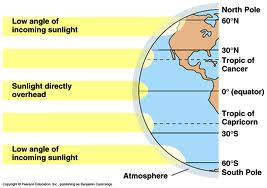
The location of both rising and descending air vary by location (by latitude and longitude) and by season (as the axis of the earth changes relatively to the sun as the Earth rotates around the sun.
The wettest areas are seen in the areas where air is 'naturally' rising i.e. at the equator and the mid-latitudes  40-60 degrees North and South.
The driest areas are seen where air is naturally descending: 20-30 degree North and South latitudes and around the poles.
Drivers of Rising and Falling air
Causes of Rising and Falling air
Source - cmmap.org
The primary causes of air circulation are surface heating, terrain changes, convergence of air masses. There is more rainfall on higher elevations of mountains and as weather patterns create turbulence in the atmosphere.
The rising and falling air moves northwards or southwards by season i.e. how the earth is oriented relative to the sun.
Like mountains, the presence of large bodies of water also influences incidence and rates of precipitation.
Adiabatic Cooling
Source - cmmap.org
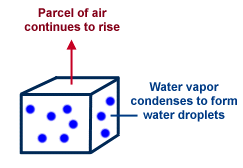
As air mass rise, pressure on the air mass drops and the air mass cools.

Source - ww2010.atmos.uiuc.edu
As rising continues, so does the cooling, till water vapor molecules condense and coalesce to form water droplets.
Intensity of precipitation increases as the depth of the rising air mass increases.
Is there any way for us to artificially raise large bodies of air that we know are full of water vapor?


Saturday, October 5, 2013

Imagine the Common Laser Pointer Delivering Drinking Water!

Local precipitation of water vapor in the air to produce rain (when needed and in necessary amounts) would be a god-send to humanity. Most common approaches so far have been ways to "seed" condensation of the water vapor in the air. Recent research has, however, surfaced the possibility of using lasers to promote condensation.
Traditional "Seeds" of Condensation
Dry Ice
Source - en.wikipedia.org
Silver Iodide crystal
Source - en.wikipedia.org
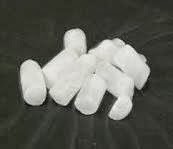
Dispersing tiny particles of dry ice, silver iodide and other salts is the traditional approach to seeding clouds to encourage precipitation in the form of rain.
The efficiency of this approach is, however, a bone of serious contention because the success of this approach is never predictable to any level of acceptable confidence.
Laser Filaments
A Laser Filament
Source - large.stanford.edu
A narrow column of plasma is known as a laser filament.
A Laser Filament
Source - large.stanford.edu
A column of plasma forms when a laser pulse self-focuses and when its self-focused intensity is high enough to ionize the medium the pulse is traversing through. At this point in time and location, the column of medium is actually a column of plasma aka a laser filament.
As the energy required for continued ionization detracts from the pulse energy, the filament steadily dissipates over time.
Air is as medium for laser beam propagation and, thus, for the formation of filaments.
Typical filaments are a few meters long but filaments with lengths in the hundreds of meters are not uncommon.
Inside a Laser Filament
HNO3
Source - ffden-2.phys.uaf.edu
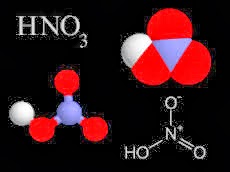
The local chemical composition of the atmosphere appears to be altered by the existence of a laser filament.
In particular, at relative humidity levels higher than 70%, the HNO3 amounts inside a laser filament are found to be over 1,000 times the levels at which HNO3 is known to stabilize water droplets, increase their growth and increase their rate of growth.
The most interesting finding from experiments is that this higher concentration outlives the laser filament by orders of magnitude i.e. the water-producing effects of increased concentration can continue to make water droplets larger for as long as 15-20 minutes.

The eventual result: rain!

Saturday, June 22, 2013

Water is a Renewable Resource because Air Exists!

The Earth's atmosphere is key to the Earth's water cycle. Without the atmosphere, Nature's  engine of delivery of a constant supply of water safe for drinking and irrigation all over the world, could not exist or function as it does and has for a very very long time.
The Atmosphere
Water Exists in Atmosphere
Source - op.gfz-potsdam.edu
All the water in the atmosphere is concentrated in the atmosphere near to and touching the ground.
It is from this atmosphere that water precipitates in its many forms - rain, snow, hail etc - down to the ground, with assistance from a combination of forces that include gravity, temperature variations, variations in the content of particles and bacteria in the atmosphere, etc.
Without the atmosphere, water would not move around as smoothly as it does today. And, maybe, it's renewable ability would be at risk if the atmosphere disappears or reduces in volume.
How much atmosphere is there?
Total volume of atmosphere
and all Water (safe and unsafe)
Source - Science Photo Library
Actually, not that much more than water!
If we represent the total volumes of water (1.4 billion cubic kilometers) and air as spheres:
- The water sphere would be 1,390 kilometers in diameter. Of course the safe water part of this sphere is miniscule.
- The air sphere would be 1,999 kilometers across.
Half of the air lies in the first 5 kilometers above ground level which contains 90% of the miniscule safe water in the atmosphere.
Running out of safe water
The key question that arises on running out of safe water is: What is the probability that we might run out of air?
Saturday, May 25, 2013

The Problem of Safe Water - The Lernaean Hydra?

Could Greek mythology's water serpent, the Lernaean Hydra, be is an excellent model to define our problem of Safe water aka freshwater?
The Lernaean Hydra
Lernaean Hydra
Source - eaudrey.com
The Hydra was the guardian of the Underworld and lived beneath the waters of a lake, the Lake of Lerna. It was shaped like a serpent with its heads its unique feature: It had multiple heads and would grow two heads for every one head that was cut off. One of the Hydra's heads was called the Immortal Head because it could not be cut off.
Heraces
(silver sculpture from the 1530s)
Source - wikipedia.org
Heracles (Hercules, to us) was charged with the task to kill the Hydra. He initially tried cutting off individual heads but saw two new heads replace those he chopped off.
Eventually he did figure out a way to kill the Hydra. Maybe, Heracles' solution shows us the way to solve the problem of safe water - more on this in the next blog post.
Constant Amount of Freshwater Precipitation 
Precipitation in rain, snow and other forms is the only act of nature that makes safe drinking water (aka freshwater) a renewable resource.
Annual Precipitation
Source - http://hypertextbook.com/facts/2008/VernonWu.shtml
The aggregate global annual freshwater precipitation has stayed more-or-less constant over time - it has never changed in an amount that might give us reason to classify freshwater as a nonrenewable resource! 
Variability in annual amount is not significant by any measure.
Whatever action humanity may take, this cycle of aggregate precipitation continues unabated. So there would conceivably not be a water problem at all unless we are missing something
India precipitation change
Source - delayedoccilater.wordpress.com
Changing precipitation patterns
Change in US precipitation
Source - meted.ucar.edu
Change in Africa precipitation
Source - scrippsblogs.ucsd.edu
This missing something is variability in local rainfall, snowfall and other deposits of freshwater i.e. the variability in aggregate precipitation at any single location. 
The problem of safe water is, thus, characterized in the changes that surface when we examine local changes in precipitation patterns.
How is the Problem of Freshwater a Hydra?
Our global precipitation amount is the body of the Hydra that doesn't change while the heads are the local problems that are as many as places where people live and work - a new factory needs additional safe water but may end up polluting a local stream from where we used to get freshwater; a city grows in population that requires the city fathers to build a new aqueduct to transport safe water from hundreds of miles away; simply look at any local community for its future vulnerabilities to its existing safe water supplies!
Like the Hydra of Heracles, our Hydra of freshwater supply grows a new head - usually too many multiple new heads - whenever local precipitation levels change beyond humanity's ability to counter that change with a compensating change in demand.
The Challenge of Safe Water
Humanity's ability to cope at the local level with the variability of nature's continuously renewed safe water supply is our primary challenge that can rip apart the foundations of our societies everywhere in the world, once again, in the 21st century.

Saturday, February 16, 2013

Rainfall Predictions Possible With Cell Phone Technology

Knowing how much rain falls on a location is key to determining if any unfilled thirst remains unfilled at that particular location. Unfortunately, however, knowing actual rainfall amounts has always been a very difficult task.
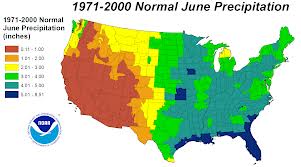
Typical Precipitation Map
Source - climatecentral.org
Resolution of data that makeup such a map is, at best, around 50 miles and is possibly as high as 100-200 miles. This data is gathered from rain gauges installed every 50, 100 or larger distances apart.
We are, however, very well aware that rainfall amounts are not usually similar or identical over a 50 mile or a 100 mile or a 200 mile square of area.
Using rainfall data from this map can lead to incorrect conclusions: thirst experienced by some farms can be overlooked, or, some farms that don't experience thirst can be targeted for additional water supply. In either case, resources expended to deliver water (safe for irrigation) will end up being misspent.
Radar Maps
Source - weathercentral.com
Doppler radar have better resolution that do rainfall data maps.
However, the installed base of Doppler radar sites are predominantly around major cities and population centers. Doppler radar, thus, provides us with high resolution rainfall maps in and around cities.
Farms or other remote agricultural locations have few of these radars and thus assessing their thirst is a problematic task
Towers (for mobile phones) may hold the answer!
For cell phones to work, microwave transmissions are relayed between individual towers. 
These microwave signals, between towers, are transmitted at a known constant strength that allows for signal decay over distance and for known weather conditions that might reasonably be anticipated. For a particular weather condition, the rate at which this signal falls off (or deteriorates) can be predicted for any set of towers.
When liquid water is in the air (i.e. it is raining), however, the signal between towers drops (is weaker) because a part of the signal is reflected off raindrops and does not make it to the next tower.
Depending upon terrain, towers can be just 1-2 miles apart.
The Netherlands Experiment
Source - lonelyplanet.com
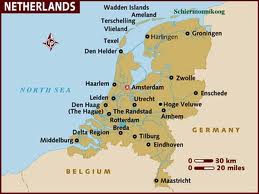
Netherlands, the country, has just 32 rain gauges, but about 8,000 mobile phone towers.
An algorithm has been developed that measures differences between normal (no rain) signal strength and signal strength when it rains.
An experiment was run, in September 2011, to see how well signal monitoring could measure actual rainfall amounts.
This test, conducted with data from just 2400 cell towers, mapped rainfall amounts very close to the measurements from a combination of radar and rain gauges.
Thirst in the Developing and Underdeveloped worlds As cell phones, and the towers that enable them, have become commonplace all over the developing and underdeveloped world, its a simpler step to use cell phone signals to measure and predict rainfall amounts in real time. The traditional alternative, involving radar and rain gauges, may not be necessary any more.

This post was inspired by an article in The New Scientist magazine

Saturday, March 3, 2012

Water Defines Climate Everwhere

Water in the troposphere, the atmosphere closest to the surface, conditions the Earth. In some locations water runs the local heating system while, at the same time, it acts as the cooling system in other locations. Water has an inordinately strong effect on climate. 


What is climate?
Climate Map
Source - blueplanetbiomes.org
Climate is weather averaged over a long period of time, usually, 30 years.
In this averaging, weather is defined by many variables. The predominant variables are temperature, precipitation and wind movement.


Temperature
Air Temperature Variations
Source - griffin.uga.edu
Temperature is a measure of the 'heat' in any location.
This 'heat' is the sum of the amount of energy deposited on a place by sunlight and the amount of energy existing on Earth at that place.
Water in the atmosphere and in surface bodies acts as the controller of heat distribution around the planet.
Water in the wind moves heat from one location to another.
Ice sheets and clouds cool the Earth's surface by reflecting the heat energy back into space.
Ocean and river currents transport heat to locations far and near.


Precipitation
Source - valdosta.edu
Precipitation IS water - in every form that water exists!


Water's Venetian Blind effect
Source - b4i.ie
Water in the air (with other greenhouse gasses like carbon dioxide) acts in much the same way as slats in a Venetian blind. 
The angle of each slat influences how much of the suns' heat and light enters a room. We can move the slats to form a 'closed' surface to, in effect, stop most light and heat from entering a room. We can fully 'open' the blinds to allow entry of the most amount of light and heat into a room.
In a similar way, nature manipulates the water content of air at individual locations (in conjunction with other parameters) to influence (raise and lower) in a very large way the temperature at a particular location.

Saturday, October 15, 2011

Oxygen Isotopes and The Water Cycle

Water molecules tagged with different isotopes of oxygen have different tendencies to evaporate and condense.


Isotopes
An Atom
Source - antonine-education.co.uk
 
An element is defined based upon the number of protons contained in its atoms i.e. different elements contain different number of protons in each atom.
With the number of protons being the same, the atoms of an element can contain a different number of neutrons. 
Isotopes are atoms of the same element or compound that differ in the number of neutrons contained in their atoms.


Oxygen Isotopes
8N and 10N Isotopes of Oxygen
Source - mhhe.com
The Oxygen atom has 15 isotopes of which 3 are stable while 12 are unstable (radioactive) with very short half-life. These unstable isotopes have variants, defined on their mode of decay, that increase their number beyond 12.
Stable oxygen Isotopes
Source - web.sahra.arizona.edu
The 3 stable oxygen isotopes have 16, 17 and 18 neutrons in the nucleus of each atom. 
The 16-Neutron isotope is the most abundant - 99.762% of all Oxygen atoms have 16 neutrons in oxygen atoms.


Primary and Secondary Isotopes of Oxygen
The 16-neutron oxygen isotope is known as the primary isotope as it is postulated to have been created by stellar evolution. The 17-neutron and 18-neutron isotopes are called secondary isotopes because their existence requires "seed nuclei" and they are created on earth.


Oxygen Isotopes and the Hydrological Cycle
Isotopes in air, ocean and ice
Source - wwnorton.com
Water molecules are tagged with the different atoms of oxygen. Thus, water molecules can be tagged with oxygen isotopes with either 16 or 17 or 18 neutrons.
Source - eesc.columbia.edu
Glacial ice, the oceans and the vapor in the air, all contain water molecules tagged with the most common 16-neutron isotope. However, concentrations of the 16-neutron isotope are different in ice, oceans and air. This difference is ultimately due to the slightly higher tendency to evaporate, of water molecules tagged with the 16-neutron oxygen isotope.
Oxygen Isotopes and the Water Cycle
Source - web.sahra.arizona.edu
Conversely, there is a slightly higher tendency of water molecules to precipitate (condense) that are tagged with oxygen atoms containing 18 neutrons.
In fact, the different isotopes of oxygen in water molecules seem to influence evaporation and condensation.


Harvesting of moisture (precipitation i.e. rain) contained in air and wind can, thus, be stimulated by the 18-neutron oxygen isotope that can be artificially created. 

Saturday, September 3, 2011

Precipitation - Our Only Continuous Water Source

Nature's Water Cycle makes water available in a number of steps that makeup the continuous cycle. We obtain most of our water from two sources: (1) Existing moving bodies of water (e.g. river), and relatively stagnant bodies of water (like lakes and water from underground aquifers) and (2) Precipitation i.e. rainfall. 

Precipitation's role

 
Rainfall
Source - sites.google.com
Precipitation from the atmosphere, in the form of snow/sleet/hail and rain, is the only source that replenishes liquid water available from all other sources. 
Any increase in river flows, any rise in the water level of lakes and seas, and any rise in the water table is the direct result of precipitation. 

State of Worldwide Water
The majority of water (70%+) is used in agriculture. Starting with the Green Revolution in the late 1950s, humans have tapped existing water bodies to the extent that many are over depleted and increasingly scarce. 
Under normal circumstances, rainfall would have any depletion. However, as our extraction rate continues to be much greater than that which can be madeup by rain, many of the historical water bodies are no longer available as dependable sources of water.

The obvious solution is to increase precipitation and/or reduce water withdrawals i.e figure out how to get more rain and/or make agriculture more water efficient!

Saturday, August 27, 2011

Who Owns the Water in the Atmosphere?


I would have guessed that we all "own" the water in the air, just like we "own" the air we breathe. Closer scrutiny of this ownership, however, reveals that we are in, pardon the pun, uncharted waters.


Water Rights
Owning a cloud
Source-nicholsoncartoons.com.au
Water laws enable individuals and companies and others to buy water from a particular source like, a stream or river, a well or a pond or groundwater below a certain location.
Under these laws any activity that tampers and reduces water amounts or flows is tantamount to having violated some one's water rights.
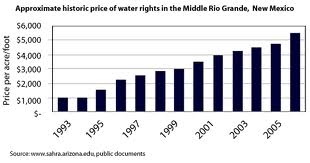
As human populations and the land for agriculture have grown over time, so have the cost of water rights. 
Source - seekingalpha.com
Today, much of the water on land is spoken for. 


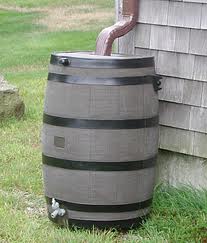
Rain Water Harvesting
Catching rainwater and storing it for later use, can be interpreted as not allowing the rainwater to enter into the ground or a nearby stream and, thus, interfering with someone downstream who owns the flow from that stream.
Diverting rainwater into a barrel was illegal in Colorado till mid-2009, when the State Legislature approved the capture of rainwater by individuals whose homes are in rural areas not supplied through a water municipality.
Other states are also currently looking into ways to support water rights in an era of water supply shortages. US states in the arid southwest have already loosened up laws to allow rainwater collection and reuse.

Saturday, August 13, 2011

Body Water Cycle Linked to Global Water Cycle?

How come the residence time that nature has established for water molecules on Earth and through the human body are so close and supportive of life? Are they interdependent in ways that we do not understand?


Water Residence Time in Human Body
Source - archive.stsci.edu.
Soon after the discovery of deuterium in 1931 , a Hungarian scientist, Gyorgy Hevesy and his colleagues used dilute volumes of heavy water to study the uptake of water by fish, other animals and humans.  
Gyorgy Hevesy
Source - nndb.com
Employing non-radioactive isotopes, like deuterium, Hevesy determined that "heavy" water, taken through the mouth, appeared in human urine (his own) after about 26 minutes. Also by monitoring urine levels, they were able to ascertain the average lifetime of a water molecule in the human body as 11-13 days.
Hevesy and his colleagues also used the same process to estimate the total water content of the average human body as 10 to the power of 27 molecules or 1,000,000,000,000,000,000,000,000,000 molecules. I have found no description of what an "average human" was commonly meant in Hevesy's time.
Water Residence Time in the Atmosphere
As described in the post dated June 25, 2011, water residence time is the lowest for water vapor in the atmosphere and equal to 9 days, as reported in Wikipedia. Other sources put this residence time at 11 days.
The residence time of water molecules is larger in all other stages of the global water cycle by orders of magnitude.


It is interesting to note that the residence times of a water molecule (on average) in the human body of 11-13 days, is just slightly larger than the residence time in the atmosphere of 9-11 days. Is nature taking care of living beings' water replacement need by making sure that rain and other forms of precipitation continuously provide new water in time to nourish life on Earth?

Saturday, August 6, 2011

Faster & Slower Water Cycles on Earth

The fastest water cycle exists at the Equator. As we move to higher latitudes, the water cycle is slower, in comparison to that at the Equator.


Water Cycle Speed
Source - cotf.edu
The speed of nature's water cycle is defined by the rates of precipitation and evaporation everywhere on Earth.
Source - kentsimmons.uwinnipeg.ca
At the equator, the energy of falling sunlight heats water and increases evaporation. As sunlight is strongest at the equator, water bodies located here experience the highest rate of evaporation.
This water vapor moves to higher latitude (in both the upper and the lower hemispheres) and precipitates back to Earth till there is very very little moisture left to precipitate at 30 degrees of latitude (in both the upper and lower hemispheres).
Deserts in white
Source - desertmuseum.org
The precipitation amount and rate is lowest at the 30 degree latitudes. Most of Earth's desert areas lie at the 30 degree latitude mark.
Not all the deserts lie within the 30 degree latitudes as local weather and climatic conditions influence water vapor concentrations in the atmosphere, proximity of land and oceans and other factors influence precipitation with the 30 degree latitudes.

Saturday, July 30, 2011

The Tropics - The Engine of the Global Water Cycle

Precipitation is highest around the equator and drops as latitude increases.


The Tropical Band
Source - Earthobservatory. nasa.gov
Rain Forests
Rain forests is our name for places that have the highest rainfall. 
As the atmosphere over the Tropics have some of the highest water vapor concentrations, the most rainfall occurs in the latitude band created by the Tropic of Cancer and the Tropic of Capricorn.


Latitude and Precipitation
Precipitation & Latitude
Source - roperld.com
As expected, the precipitation (rainfall) is highest between the bands created by the two Tropics.
The amount of water vapor available in the tropical atmosphere is orders of magnitude greater than that available elsewhere. In other words, the water cycle in the tropics circulates greater volumes of water than the water cycle does in other parts of the Earth, recognizing the existence of Temperate Rain forests that are the result of local variations in atmospheric moisture content, local temperature and other factors.

The tropics are the engine of the global water cycle (aka, the Global Hydraulic Cycle).

Saturday, July 9, 2011

Global Warming Increases the Ocean in the Atmosphere

Increased water-holding capacity of the atmosphere and increased evaporation are together expected to increase the amount of water in the atmosphere.


Source - SuperStock.com
(1598R‑241586)
Water-Holding Capacity of the Atmosphere
On average, 2-3% of the molecules in the air are water molecules, with a maximum possible of 4% in warm and humid tropical locations.
However, as temperatures increase water vapor volume can exceed 4%, like in the inside of a boiling tea kettle.
Climate models, Earth-system science and satellite observations all conclude that as carbon dioxide levels increase, the air will heat up and water vapor volume in the air will increase beyond the maximum of 4%. 


Surface Evaporation
Evaporation is a continuous surface phenomenon that maintains an equilibrium between molecules leaving a water surface as vapor and vapor molecules being added to a water surface as liquid. As higher temperature implies more kinetic energy, there is more evaporation at higher temperatures


7% vs. 1-3% increase in water fluxes
Atmospheric studies and Earth System Science predict that for every degree Kelvin increase in surface water temperature, the ocean of water in the atmosphere will increase by 7%, while precipitation will increase between 1% and 3% - Source: Science, Vol 317, pages 233-235

Saturday, July 2, 2011

Planes may increase Precipitation

Motion through clouds can expand air and, through this expansion, the air is cooled to such a low temperature that vapor condenses to liquid and even forms ice crystals.


Water Droplets seen in Clouds That Planes Penetrated

Source - http://www.youtube.com/watch?v=pYWAR2OiiNg&feature=mfu_in_order&list=UL


As reported in the LA Times (2 July 2009 issue), a study has been completed by the National Center for Atmospheric Research in Boulder, Colorado, that links planes to precipitation.
The study focused on satellite images taken over a four-hour period of a cloud layer over Texas. The images revealed a series of holes and canals in the cloud layer, that upon analysis, were shown to be made up primarily of liquid water droplets.
Scientists measured the holes and canals, and through a review of FAA records, identified a full array of aircraft that were involved.


Expanding Air Enables Flight and Condensation
Computer models built as part of the study showed that the very same mechanisms that keep airplane aloft had cooled the air to the extent necessary to condense water vapor. Cooling of air was the result of ambient air being forced to expand around propeller tips and over a jet wing.


Condensation Nuclei NOT Needed
Typically, an increase in collisions between water vapor molecules and condensation nuclei is required to convert vapor molecules to liquid molecules. But, as this research shows, rapid air expansion by motion of airplanes can produce precipitation without requiring condensation nuclei.

Saturday, May 14, 2011

Song and Dance for Raindrops - Superstition or Science?

Many human communities have a long-standing belief that song and dance can deliver raindrops from the gods.


Nucleation of vapor into liquid droplets
Air may be under-saturated, saturated or super-saturated with water vapor. As 2% of the moisture in the air is always in the liquid state, the 98% of water in vapor form comes into occasional contact with water droplets in the air.
Thermodynamically speaking, both the under-saturated and the saturated conditions are stable, in the sense that the vapor and liquid states continue to coexist indefinitely unless a physical disturbance occurs. 
The super-saturated condition, however, is thermodynamically unstable i.e. the excess vapor in the air is actively wanting to exit from the air and is prone to doing so in liquid water form. In fact, if the super-saturated vapor comes into contact with liquid water droplets and continues to stay in contact for less than a second, this vapor condenses immediately to grow the liquid droplet.


Song and Dance create motion in air
Loud continuous sounds cause air to move (as sound waves cause tiny movements in the air) as does dancing that moves air in chunks the size of our human bodies. The net amount of physical movement of air is, of course, dependent upon the pitch and duration of the sounds we make and the intensity and continuity of our physical movement.
It is thermodynamically proven that on a cool still night, when air is saturated or super-saturated with water vapor, when this air contains water droplets of a critical size, the right intensity and continuity of sound and human body movement can condense water vapor into fog that eventually turns into liquid rain.


This use of sounds to produce rain is also documented in the rain dances in Africa and the use of yelling in the Yunan mountains of China.

Saturday, May 7, 2011

Our Atmosphere is the ONLY source of Freshwater

The ONLY source of 99% of ALL freshwater is water contained in the atmosphere. As 98% of this water is in vapor form, precipitation is the key to delivery of freshwater as rain, snow, dew and mist.

Freshwater - Definition
All water contains dissolved solids.
  • Water with dissolved solids that constitute <0.5 parts per thousand, is classified as freshwater
  • Water in the oceans contains 30-50 parts per thousand of dissolved solids 

Water and Life on Earth
Life on Earth, of every kind, depends entirely on a complex set of interrelated conditions - the most significant condition is that all cells have to continue to be 'wet' to function. Some cells can survive periods of dehydration but during periods of dehydration, they cannot perform their function.  
All cells reflect the different salt (saline) water environments that exist on Earth. Some exist only in the salt-waters of the oceans while others (including humans) cannot survive without freshwater.

Limited but plentiful resource
There is enough freshwater for all living things that require it. However, the total amount of freshwater available is limited by nature and this amount is more than adequate for all living things that require it. 
The limited supply of freshwater is continuously replenished by the Earth's hydrological cycle.
On an average, only 11 days elapse between the time water evaporates into the atmosphere (mainly from the oceans) and the time it drops at rain after being moved around by wind.

One estimate of global fresh-water distribution
Water sourceWater volume, in cubic milesWater volume, in cubic kilometersPercent of
freshwater
Percent of
total water
Lakes, swamps24,600102,5000.29%0.008%
Rivers5092,1200.006%0.0002%
Total global fresh water8,404,00035,030,000100%2.5%
Total global water332,500,0001,386,000,000--100%
Source: Gleick, P. H., 1996: Water resources. In Encyclopedia of Climate and Weather, ed. by S. H. Schneider, Oxford University Press, New York, vol. 2, pp.817-823.


Amount of Freshwater in the Atmosphere
The atmosphere contains 10.5 billion acre-feet of water at any instant in time. This water is more than 6 times all the water in all the rivers in the world.

The vast majority of freshwater is locked up in glaciers that constitute ice packs at the poles and on mountain tops, in the pores of rocks and underground.


Saturday, February 12, 2011

Harvesting Liquid Water in Fog - Part II

Mankind has made significant strides towards harvesting from the 2% of water in the air that exists in liquid form. This progress comes from artificially replicating nature's inventions like the back of the African Stenocara beetle. Other moisture capturing systems are found in nature's designs for the Texas Thorny Devil Lizard, the structure of Cactus thorns and the structure of the leaves of plants like the Welwitschia Mirabilis.

Bio-mimicry & Species Adaptation
Stenocara Beetle
(Image: www.rain-barrel.net)
The Stenocara beetle lives in the Namib Desert in Africa which has endured arid and semi-arid condition for over 55 million years, has less than 5mm of rain annually and is practically barren of vegetation. 

The only other sources of water are underground rivers and morning fog that moves in over the desert near the coast from the ocean. This fog travels at gale speeds a few times a month.

Microscopic Detail
(photo: Oxford University)
An inhabitant of the Namib Desert, the Stenocara Beetle has evolved to harvest the liquid water in the fog through a combination of hydrophilic bumps/ridges and hydrophobic troughs/valleys on its back. 

To survive in the desert, Stenocara evolution has adapted it to catch the liquid water in the fog through a back of unique design . As described in http://www.biomimicryeuropa.org, "The peak of each bump is smooth and attracts water. Tiny rounded nodules, no wider than a human hair, cover the slopes of each bump and the troughs in between. The nodules are coated in a wax-like material, making them hydrophobic. When the fog rolls in, the beetle tilts its body into the wind. The water droplets from the fog are repelled from the nodules but stick to the peaks of the bumps. The droplets grow until they are large enough to roll down from the top of the peaks and are channeled to a spot on the beetle's back that leads straight to its mouth."

Design patent No. PCT/GB02/00067
Zoologists, led by Andrew Parker at Oxford University, discovered this hydrophilic-hydrophobic design and have obtained a design patent on it. Now the pace has quickened to find a commercial way to gain from nature's design of the Stenocara beetle's back.

The MIT Project
Chemical engineer Robert E. Cohen and materials scientist Michael F. Rubner have perfected a film with hydrophilic peaks and hydrophobic runways that extract liquid water from air and possibly go a step further in coalescing water vapor into liquid water. The next frontier is commercialization of this film for common use.

The University of Sydney Project
Australia, a country with few inland water resources, has nearly 90% of its population living in coastal cities. At the University of Sydney, a small team has a large goal - develop a film that can be laid on a large surface (like the side of a building or the roof of a house) that is similar in design to nature's design for the Stenocara's back with the very same water-harvesting functionality that nature has adapted for the survival of Stenocara and the propagation of its species

All this effort for 2% of the water contained in the air!