Saturday, October 8, 2011

Water has influenced languages all over the world

Water has inspired words, symbols and all kinds of communications between people all over the world


Chinese Character for "Political Order"
Source - Geographictravels.com
The concept behind 'political order' has always been about controlling the populace. 
It's interesting to note that the Chinese symbol for "Political Order" is simply a combination of two symbols:
- One to represent a "river" and 
- The other represents a way to control the flow of water in the river i.e. a "Dike."
It is estimated that the Chinese language and its component characters are at least from 1000 BC. The relationship between water and 'control' is, obviously, a very very old one.


The English word - "Rivals"
Source - overclock.net
The English word "rivals" has as its root the Latin word "Rivalis" that means "one taking from the same stream as another.
Obviously, here the implication is that only one can (and eventually, will) possess what both want.


Water in Kanji
Source - waterstation.us


Japanese character for "Rice"
The Kanji symbols for water and rice too are nearly identical. 
Rice Symbol
Source - japanese-symbols.org


Saturday, October 1, 2011

Water Needs Thinking on a Massive Scale

The fate of the world in the 21st century is tied closely to the ability to get the right quantity of quality water when and where nature and humans require it. 
The challenge, posed by the daunting variety of solutions required, can only be resolved through thinking on a massive scale.


The Challenge's Daunting Variety 
Source - asianews.it
Source - yousaytoo.com

Source - keetsa.com


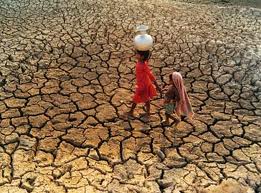
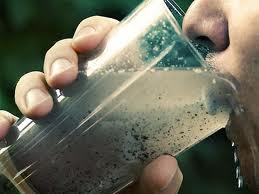
Usually, we think of water only when we have a problem with either not having enough water or having unsafe water. 


Having too much water is a problem too.


The Challenge's Daunting Geographical Distribution
Source - gfdl.noaa.gov
Source - earthtrends.wri.org
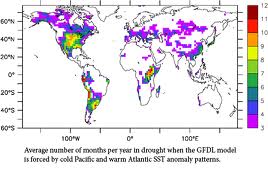
Floods, droughts and unsafe water exist everywhere on Earth. 
Any effort to solve the challenge must recognize these multi-location issues and that if custom solutions are developed and implemented for every location and its specific water issue, water issues will always exist all over the world.


The Solution
Keeping the daunting variety of the challenge in mind, it is necessary and prudent to think of ways to resolve a vast variety of the challenge with the least number of solutions.


Such thinking will invariably turn towards attempts to increase supply from the water-laden air everywhere. Finding a way to extract moisture (both the liquid, but more importantly, the water vapor) from the atmosphere remains the ideal solution.

Saturday, September 24, 2011

Water - Earth's Infinite Resource!

We solve the problem we see. We see what we have chosen to look for. We choose based on our background and knowledge while basking in the comfort that others with the same understanding will make the same choice!


Labeling Water as a FINITE resource is probably the biggest obstacle to solving the Worldwide Water Crisis! 


Starting with this mind-limiting perspective (that water is a Finite resource) restricts the options that can be perceived. Even though we call other resources as finite, we are keenly aware that 
(a) There is NO resource that we have actually run out of, and
(b) Non-evolutionary changes always require coming up with a unique perspective that starts with the recognition that the "Stone Age did not end because we ran out of stones!"


Source - hightonps.vic.edu.au
What's half of 11?
To someone who divides using rules of mathematics, 5.5 is half of 11.
Source - squidoo.com


To someone who divides with a vertical cut, into a left half and a right half, 1 is half of 11
To someone who divides with a horizontal cut, with a top half and a bottom half, 11 is half of 11


What's half of 8?
Depending upon how we interpret the question, half of 8 can be 4, 0 or 3.


What characteristics define water as a resource?
Water supply is characterized by the following:
A. We cannot make water.
B. We cannot destroy water.
C. We cannot transform water, like we can oil ... say, into electricity
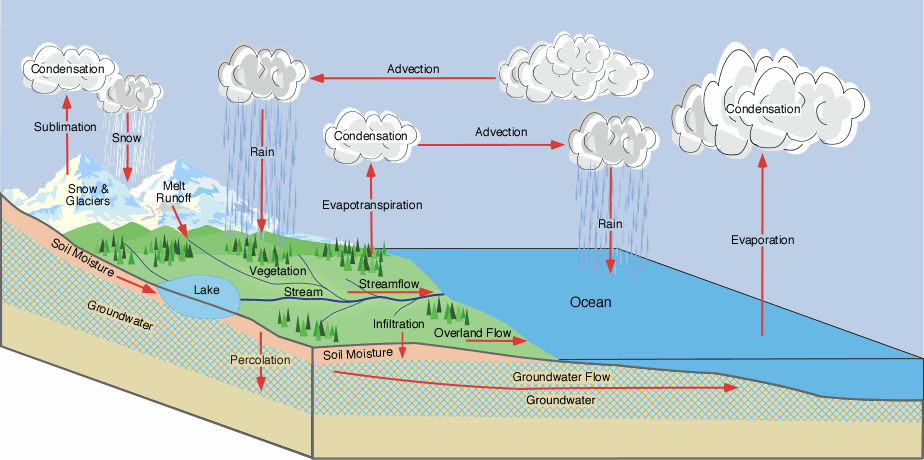
D. Water is a circulatory resource. The circulation process is called the Water Cycle or the Hydrological Cycle.
E. The Water Cycle never ends.
F. There is evidence that the Water Cycle can speed up and slow down, under specific circumstances.
G. Water, in every stage of the circulation process, is regularly recharged or replenished.
H. Naturally occurring bodies of water (e.g. lakes and rivers) and man-made reservoirs do run dry.
I. Empty reservoirs, devoid of water, may not be replenished ever again.


The above characteristics lead to the conclusion, especially by those of us who focus on reservoirs running dry, that water is a finite resource.


However, for those among us who focus on the flow in the Water Cycle and recognize that water flows will speed up when the Water Cycle speeds up, water is an unlimited and virtually infinite resource.


Saturday, September 17, 2011

A Crisis in Water Supply Exists Everywhere

Every place on Earth has experienced a water supply crisis sometime in history. And the future is not expected to be any different - every place on Earth is expected to be hit with a crisis in water supply sometime in the future.


Drought
Drought is the worst form of water crisis. It is a term applied to locations that have experienced NO RAIN for an extended period of time. 
Source - thedailygreen.com


Drought maps have been produced for the world, and no continent is immune from severe drought except the polar regions that are awash in water and ice, and where no large human presence exists and where no human activity is performed.


Source - standeyo.com
It needs to be recognized that even areas not highlighted to experience any drought will have "minor" crisis with their water supplies. For example, some may find their water temporarily polluted and unsafe to drink; others may experience a break in the aging infrastructure that will temporarily cut their supply; others may simply get no rain to replenish reservoirs and a temporary restriction may be imposed on water usage.


The water crisis exists all over the world, but with varying impact. And everywhere there exists (a) the atmosphere, that contains water in vapor and liquid form and (b) Wind that continues to deliver water-laden air everywhere.

Sunday, September 11, 2011

WATER - Our #1 Choice to Soothe Our Soul

There are many memorials to September 11 but only one National Memorial. The competition for it was fierce and hotly debated but what eventually got everyone's nod centers on water to showcase everything we feel about the events of September 11.


The September 11 National Memorial in Manhattan, NY USA
A Pool at the Footprint of Each Tower
Source - gearthblog.com
An inside edge of the North Reflecting Pool
Source - New York Times; Pool photo by David Handschuh
Names Inscribed on the Edge of Each Pool
Source - wnyc.org


A Rose on a Name on September 11, 2011
Source - ibtimes.com

Saturday, September 3, 2011

Precipitation - Our Only Continuous Water Source

Nature's Water Cycle makes water available in a number of steps that makeup the continuous cycle. We obtain most of our water from two sources: (1) Existing moving bodies of water (e.g. river), and relatively stagnant bodies of water (like lakes and water from underground aquifers) and (2) Precipitation i.e. rainfall. 

Precipitation's role

 
Rainfall
Source - sites.google.com
Precipitation from the atmosphere, in the form of snow/sleet/hail and rain, is the only source that replenishes liquid water available from all other sources. 
Any increase in river flows, any rise in the water level of lakes and seas, and any rise in the water table is the direct result of precipitation. 

State of Worldwide Water
The majority of water (70%+) is used in agriculture. Starting with the Green Revolution in the late 1950s, humans have tapped existing water bodies to the extent that many are over depleted and increasingly scarce. 
Under normal circumstances, rainfall would have any depletion. However, as our extraction rate continues to be much greater than that which can be madeup by rain, many of the historical water bodies are no longer available as dependable sources of water.

The obvious solution is to increase precipitation and/or reduce water withdrawals i.e figure out how to get more rain and/or make agriculture more water efficient!

Saturday, August 27, 2011

Who Owns the Water in the Atmosphere?


I would have guessed that we all "own" the water in the air, just like we "own" the air we breathe. Closer scrutiny of this ownership, however, reveals that we are in, pardon the pun, uncharted waters.


Water Rights
Owning a cloud
Source-nicholsoncartoons.com.au
Water laws enable individuals and companies and others to buy water from a particular source like, a stream or river, a well or a pond or groundwater below a certain location.
Under these laws any activity that tampers and reduces water amounts or flows is tantamount to having violated some one's water rights.
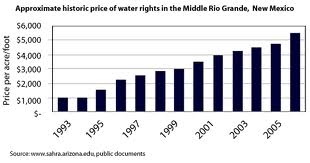
As human populations and the land for agriculture have grown over time, so have the cost of water rights. 
Source - seekingalpha.com
Today, much of the water on land is spoken for. 


Rain Water Harvesting
Catching rainwater and storing it for later use, can be interpreted as not allowing the rainwater to enter into the ground or a nearby stream and, thus, interfering with someone downstream who owns the flow from that stream.
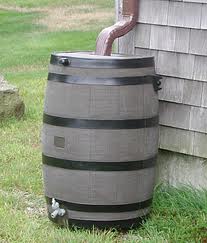
Diverting rainwater into a barrel was illegal in Colorado till mid-2009, when the State Legislature approved the capture of rainwater by individuals whose homes are in rural areas not supplied through a water municipality.
Other states are also currently looking into ways to support water rights in an era of water supply shortages. US states in the arid southwest have already loosened up laws to allow rainwater collection and reuse.

Saturday, August 20, 2011

Water Demand in 2025

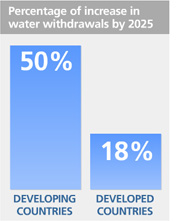
Demand for water is growing most everywhere on Earth. But demand growth is largest in the developing world.


Population Growth
Source-Sustainablescale.org
The population of the developed world is projected to grow at a fraction of the growth in population in the developing world.
Of the 10 billion people projected to reside on Earth by 2050, only about 15% are seen to reside in the developed world.
Both the high growth in developing countries' population and the fact that water consumption increases as living standard increase, fuel growth in water demand in the developing world.

As a percentage, developing country water demand is expected to grow approximately 300% over the growth of demand in the industrialized countries.

Saturday, August 13, 2011

Body Water Cycle Linked to Global Water Cycle?

How come the residence time that nature has established for water molecules on Earth and through the human body are so close and supportive of life? Are they interdependent in ways that we do not understand?


Water Residence Time in Human Body
Source - archive.stsci.edu.
Soon after the discovery of deuterium in 1931 , a Hungarian scientist, Gyorgy Hevesy and his colleagues used dilute volumes of heavy water to study the uptake of water by fish, other animals and humans.  
Gyorgy Hevesy
Source - nndb.com
Employing non-radioactive isotopes, like deuterium, Hevesy determined that "heavy" water, taken through the mouth, appeared in human urine (his own) after about 26 minutes. Also by monitoring urine levels, they were able to ascertain the average lifetime of a water molecule in the human body as 11-13 days.
Hevesy and his colleagues also used the same process to estimate the total water content of the average human body as 10 to the power of 27 molecules or 1,000,000,000,000,000,000,000,000,000 molecules. I have found no description of what an "average human" was commonly meant in Hevesy's time.
Water Residence Time in the Atmosphere
As described in the post dated June 25, 2011, water residence time is the lowest for water vapor in the atmosphere and equal to 9 days, as reported in Wikipedia. Other sources put this residence time at 11 days.
The residence time of water molecules is larger in all other stages of the global water cycle by orders of magnitude.


It is interesting to note that the residence times of a water molecule (on average) in the human body of 11-13 days, is just slightly larger than the residence time in the atmosphere of 9-11 days. Is nature taking care of living beings' water replacement need by making sure that rain and other forms of precipitation continuously provide new water in time to nourish life on Earth?

Saturday, August 6, 2011

Faster & Slower Water Cycles on Earth

The fastest water cycle exists at the Equator. As we move to higher latitudes, the water cycle is slower, in comparison to that at the Equator.


Water Cycle Speed
Source - cotf.edu
The speed of nature's water cycle is defined by the rates of precipitation and evaporation everywhere on Earth.
Source - kentsimmons.uwinnipeg.ca
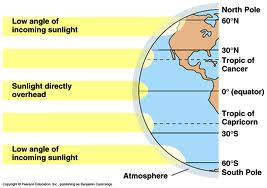
At the equator, the energy of falling sunlight heats water and increases evaporation. As sunlight is strongest at the equator, water bodies located here experience the highest rate of evaporation.
This water vapor moves to higher latitude (in both the upper and the lower hemispheres) and precipitates back to Earth till there is very very little moisture left to precipitate at 30 degrees of latitude (in both the upper and lower hemispheres).
Deserts in white
Source - desertmuseum.org
The precipitation amount and rate is lowest at the 30 degree latitudes. Most of Earth's desert areas lie at the 30 degree latitude mark.
Not all the deserts lie within the 30 degree latitudes as local weather and climatic conditions influence water vapor concentrations in the atmosphere, proximity of land and oceans and other factors influence precipitation with the 30 degree latitudes.

Saturday, July 30, 2011

The Tropics - The Engine of the Global Water Cycle

Precipitation is highest around the equator and drops as latitude increases.


The Tropical Band
Source - Earthobservatory. nasa.gov
Rain Forests
Rain forests is our name for places that have the highest rainfall. 
As the atmosphere over the Tropics have some of the highest water vapor concentrations, the most rainfall occurs in the latitude band created by the Tropic of Cancer and the Tropic of Capricorn.


Latitude and Precipitation
Precipitation & Latitude
Source - roperld.com
As expected, the precipitation (rainfall) is highest between the bands created by the two Tropics.
The amount of water vapor available in the tropical atmosphere is orders of magnitude greater than that available elsewhere. In other words, the water cycle in the tropics circulates greater volumes of water than the water cycle does in other parts of the Earth, recognizing the existence of Temperate Rain forests that are the result of local variations in atmospheric moisture content, local temperature and other factors.

The tropics are the engine of the global water cycle (aka, the Global Hydraulic Cycle).

Saturday, July 23, 2011

Sun+Atmosphere = A Moisture Pump

An energy imbalance in the atmosphere moves air, and the moisture it contains, from the tropics to higher latitudes.

Energy for Atmospheric Circulation
Sunlight
Source - digitalart.org
The most energy from the sun, falls on the Earth's equator. The least energy from the sun falls on the polar regions. 
This difference in energy creates an energy potential that moves air (mass) from the equatorial region to the polar regions through a series of complex steps and air movement patterns.
Source - geology.wmich.edu
The Tropics - A Moisture Source
As temperatures rise, more water evaporates and is contained in the atmosphere. The most water, thus, exists in the atmosphere over the tropics and equatorial region, while less moisture exists in the air over the poles. 
As the air moves from the warmer to the cooler areas, this air acts like a moisture pump. While a number of global and local influences impact this pump's operation, the tropics are a dominant source of moisture to higher latitudes.

Saturday, July 16, 2011

100 gallons of Water Added into Air Daily by 1 Big Tree

Trees, and all plants do to some extent, recycle some of the rainwater that falls on them rather than let it all flow away


The "Smoke" in Great Smokey Mountains National Park
Smokey Mountains National Park
Source - art.com
The Great Smokey Mountains contain over 187,000 acres of old growth forest - the largest such forest east of the Mississippi. It got its name because, from a distance, this forest-covered range appears to be exhaling plumes of smoke into the sky above it.
But this is not smoke. This forest is usually covered in a mist that is the result of water vapor transpired by the trees and the natural fog created by water-laden air from the Gulf of Mexico that cools rapidly as it moves onto the higher elevations of the Appalachian mountain range.
Scientists estimate that a quarter of the rain that falls on these trees is transpired back into the atmosphere by the forest.


The Amazon Rain Forest
Source - travelblog.com
Trees in the 55 million year-old Amazon Rain Forest cover over 1.4 billion acres.
The forest gets about 9 feet of rain every year.
Scientists estimate that fully half the rainfall is transpired back into the atmosphere by trees of the rain forest. 
Estimates vary widely, but every canopy tree in the rain forest is estimated to transpires more than 00 gallons of water every day, during the growing season - this translates into adding over 10,000 gallons of water transpired into the atmosphere over the course of a summer from ONE tree.

Saturday, July 9, 2011

Global Warming Increases the Ocean in the Atmosphere

Increased water-holding capacity of the atmosphere and increased evaporation are together expected to increase the amount of water in the atmosphere.


Source - SuperStock.com
(1598R‑241586)
Water-Holding Capacity of the Atmosphere
On average, 2-3% of the molecules in the air are water molecules, with a maximum possible of 4% in warm and humid tropical locations.
However, as temperatures increase water vapor volume can exceed 4%, like in the inside of a boiling tea kettle.
Climate models, Earth-system science and satellite observations all conclude that as carbon dioxide levels increase, the air will heat up and water vapor volume in the air will increase beyond the maximum of 4%. 


Surface Evaporation
Evaporation is a continuous surface phenomenon that maintains an equilibrium between molecules leaving a water surface as vapor and vapor molecules being added to a water surface as liquid. As higher temperature implies more kinetic energy, there is more evaporation at higher temperatures


7% vs. 1-3% increase in water fluxes
Atmospheric studies and Earth System Science predict that for every degree Kelvin increase in surface water temperature, the ocean of water in the atmosphere will increase by 7%, while precipitation will increase between 1% and 3% - Source: Science, Vol 317, pages 233-235

Saturday, July 2, 2011

Planes may increase Precipitation

Motion through clouds can expand air and, through this expansion, the air is cooled to such a low temperature that vapor condenses to liquid and even forms ice crystals.


Water Droplets seen in Clouds That Planes Penetrated

Source - http://www.youtube.com/watch?v=pYWAR2OiiNg&feature=mfu_in_order&list=UL


As reported in the LA Times (2 July 2009 issue), a study has been completed by the National Center for Atmospheric Research in Boulder, Colorado, that links planes to precipitation.
The study focused on satellite images taken over a four-hour period of a cloud layer over Texas. The images revealed a series of holes and canals in the cloud layer, that upon analysis, were shown to be made up primarily of liquid water droplets.
Scientists measured the holes and canals, and through a review of FAA records, identified a full array of aircraft that were involved.


Expanding Air Enables Flight and Condensation
Computer models built as part of the study showed that the very same mechanisms that keep airplane aloft had cooled the air to the extent necessary to condense water vapor. Cooling of air was the result of ambient air being forced to expand around propeller tips and over a jet wing.


Condensation Nuclei NOT Needed
Typically, an increase in collisions between water vapor molecules and condensation nuclei is required to convert vapor molecules to liquid molecules. But, as this research shows, rapid air expansion by motion of airplanes can produce precipitation without requiring condensation nuclei.

Saturday, June 25, 2011

Our Atmosphere is the Most Active Water Reservoir

Freshwater stays in the Atmosphere's Ocean, on average, only 9 days.


Water Storage Reservoirs
Source - www.physicalgeography.net
A water molecule, either as a saltwater molecule or as a freshwater molecule, is stored in one of 8 reservoirs at any point in time - the atmosphere, oceans, lakes, soils, glaciers, snowfields and in the ground. Water molecules stay in different reservoirs for different periods of time.


Water in the Atmosphere has the smallest residence time

Average Reservoir Residence Times
ReservoirAverage residence time
Antarctica20,000 years
Oceans3,200 years
Glaciers20 to 100 years
Seasonal snow cover2 to 6 months
Soil moisture1 to 2 months
Groundwater: shallow100 to 200 years
Groundwater: deep10,000 years
Lakes50 to 100 years
Rivers2 to 6 months
Atmosphere9 days
Residence Time is the time, on average that a water molecule spends in a particular reservoir while moving through the hydrologic cycle.
As shown in the chart, water (in freshwater form) stays the shortest period (just 9 days, on average) in the atmosphere. 
Water in the deep ground, on the other hand has the longest residence time of 10,000 years.


The hydraulic Cycle is a Continuous Cycle
The hydraulic cycle never stops. Any efforts to extract water from the atmosphere will only speed-up the hydraulic cycle and reduce water's residence time, in the atmosphere to less than 9 days, on average.
The impact of human efforts to extract water from the atmosphere on Residence times is unknown as no significant extraction is currently possible or done. The efforts at seeding rain have so far been very localized efforts

Saturday, June 18, 2011

Water Makes a Leaf Stand Upright

Leaves wilt, most commonly, when water volume in its cells drop.


Turgidity
A Deflated Balloon
Source - simplystatedbusiness.com
A wilted cell is like a balloon that has lost its air. The pressure of the air inside the balloon, against the balloon wall, provides the rigidity required to maintain the shape of a balloon. 
Healthy Parsley Leaves
Source - faithforeverliving.org
The water inside a cell is like the air in balloons.
As the amount of water drops in a cell, the cell looses its ability to maintain its shape - the cell wilts like a deflated balloon because the pressure (known as Turgor Pressure) from the water in the cell against the cell wall drops.


Many Many cells
Cellular Structure of a Leaf
Source - exploratorium.edu
A leaf is made up of many, many cells. As individual cells loose the water contained in each cell, each cell wilts. Eventually this wilting is clearly visible as a wilted leaf.

Saturday, June 11, 2011

Our Regular, Renewable Freshwater Supply comes from the Air

Net daily precipitation of water vapor from the atmosphere is like a "river" from the world's Oceans to land. This 'river' delivers between 40,000 - 47,000 cubic km of freshwater, on average, every year forever.


Rivers seed and sustain life
Rivers are known by two attributes, their length and the amount of water they carry. 
Although the terrain for every river is vastly different, a river performs a function critical to life i. e. it continues to supply freshwater for humans and other living creatures, including, plants and nature's ecosystems.
This is one reason why all early human populations, everywhere in the world, began and multiplied on banks of a river.


Our Renewable Water Supply = 40,000-47,000 cubic km per year
Rain Cloud
Source - ed101.bu.edu
The vast ocean of water that exists in the Earth's atmosphere regularly delivers a river of water to land masses on Earth.
Discounting evaporation from land, net precipitation of water vapor in the form of dew, rain, snow, floods, hail, etc. delivers 40,000-47,000 cubic km of freshwater, on average, every year.
As long as the Sun continues to power the Earth's Hydrologic Cycle, this supply will continue.


Supply distribution is Uneven
Like rivers, however, this supply is not uniformally distributed on all the land mass on Earth or where people and living things congregate.
Also, it does not arrive on a schedule we can bank on. Should this be a problem in the Age of Humans?


The Age of Humans
It is now widely recognized that we humans have shaped the Earth to our preferences with so wide and deep an impact that we now play a very significant (some say predominant) role in 90% of the ecosystems that exist on Earth. The climate crisis is just one BIG example of our impact.
In this Age, is it not possible for humans to intensify and speed-up nature's evaporation-precipitation cycle to the advantage of all ecosystems and life on Earth, including our own?

Saturday, June 4, 2011

There's a Freshwater Ocean in the Air!

The global elemental water cycle (aka The Hydrologic Cycle) stores about 3.43 million billion US gallons of freshwater in the atmosphere at any point in time and precipitates the equivalent of 13 million billion US gallons of water on land every year


Our Sun is the Primary Driver of the Water Cycle
The Sun
Source - science.nationalgeographic.com
Freshwater in the atmosphere is water evaporated from land and oceans by the energy contained in sunlight.
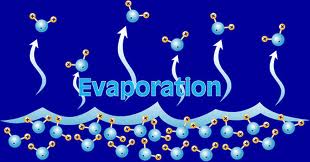
Sunlight heats water on land and oceans causing some of it to evaporate into the atmosphere. 
Sunlight also creates air currents that raise the evaporated water vapor higher in the atmosphere and moves the water vapor using wind all over the globe.


Water Evaporation into the Air
Evaporation
Source - aboutcivil.com
Between 496,000 and 460,000 cubic kilometers of water evaporates every year into the atmosphere. 
Of this amount 70,000 -73,000 evaporates from land while 390,000-423,000 evaporates from the oceans every year.
Evaporation adds between 1,359 and 1,260 cubic km daily into the air = the addition of 358,800 - 332,700 billion US gallons of water a day
References:
Principles and Applications of Aquatic Chemistry,By François Morel, Janet G. Hering
Industry, Fresh Water and Sustainable Development, WBCSD & UNEP, 1998Water - Facts & Trends - Ver 2, World Business Council for Sustainable Development