Saturday, May 26, 2012

How Successful Are We At FreshWater Management?

A study was completed in early 2010 that mapped threats, like scarcity and pollution, to freshwater supplies at the regional level. This study shows that humankind has, so far, a good record at combating threats to freshwater security is many parts of the world.
Conclusions of the Study
1. About 80% of the world's population exists in areas where freshwater supplies are NOT secure
2. The most severe threat is to 3.4 billion people
Natural Areas of Freshwater Scarcity
Natural areas of Scarcity
Source - nature.com
Looking at the global map:
- Much of North America (especially the population centers of Canada, US and Mexico) and Western Europe is under high stress. Many areas experience extreme natural stress
- Much of Middle Africa should be fairly unstressed
- Most of India and Western China are under high natural stress.
- There are wide areas with NO natural water flows like, much of Australia, northern and Southern Africa and Inner Asia.
Impact of Human Intervention
Freshwater Managed by Humankind
Source - nature.com
Looking at this global map, some startling results are visible:
- Much of North America (except Mexico) is being managed to virtually eliminate natural unavailability of freshwater
- Middle Africa, despite being under few natural forces of water stress, is experiencing extreme freshwater scarcity
- India's water management is somewhat successful at alleviating natural water stresses but has a long way to go to be freshwater secure
- China's water management is somewhat successful at alleviating natural water stresses but has a long way to go to be freshwater secure
Assumptions underlying the Study
Undoubtedly, we need to better understand and agree with all the assumptions, subjective factors, weighing of individual threats, combining of threats, etc before people all over the world will accept how well or how poor a job they have done on freshwater security.
However, there are three conclusions that we should all be able to agree on:
A. The threat of freshwater scarcity is a common threat virtually everywhere around the globe.
B. There are two options to resolve this common threat: We can
EITHER work together, addressing the BIG scale of the threat, to find a universal solution, 
OR we leave it to individual nations and regions to work out their individual custom solutions.
C. The problem of freshwater insecurity is so large in scale that time is of the essence i.e. we must eradicate freshwater security quickly before the increasing freshwater demand overwhelms us. This increasing demand is coming in the next decade from the 500+ million people who are expected to dramatically improve their Standard of Living and the 700 million additions to the human population

Saturday, May 19, 2012

Water Extracted For Agriculture

A most common statement is that agriculture uses the largest amount of water when our world is looked at as a whole: 70% of our water usage is for agriculture, 22% for our industries and a meager 8% in people's homes and for their personal use.
The 70-22-8 Segmentation does not apply to any country
Source - RBC Wealth Management 
Water extracted for agricultural use is different in different countries. 
The richest nations use the most water for their industrial goods with agriculture usage being only about 50% of their industrial usage.
In contrast, low-income and middle-income nations spend over 800 times more water on agriculture than they do on industry. These lower income countries spend as much as 82% of their water supplies on agriculture.
Source - www.fao.org/nr/water/aquastat/globalmaps/05_AGW_PCT_TW.pdf
Countries have their own individual ratios between the water they use for agriculture and the water they use in industry.
As shown in the chart, agricultural water use can range from a low of <25% to a high that is >90%.
And, the lower-income countries generally use a greater percentage of water  for agricultural uses.
Rain-Fed Agriculture
Irrigation fed land
Source - fao.org
The water that is withdrawn by nations for agriculture is always supplemented by rainfall.
In fact, agriculture that depends solely and mostly on rain represents about 80% of the total area under cultivation - This crop land produces about 60% of global food.
Also, developing countries have the largest share of cropland that requires irrigation i.e. land on which rain-fed agriculture is not suitable.
Southwestern US, southwestern Australia

Saturday, May 12, 2012

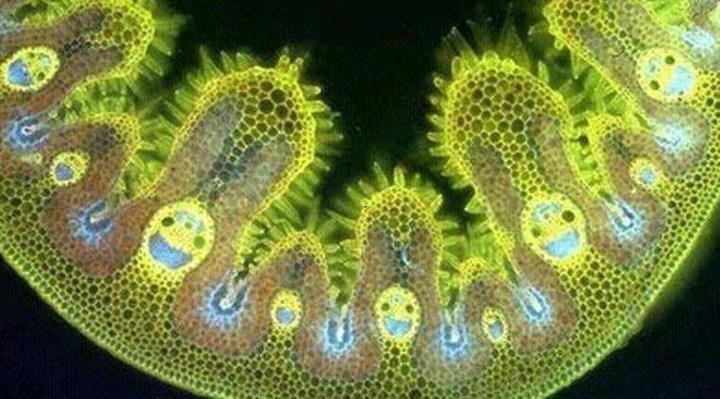
Water Channels in a Blade of Grass

Cross-Section of a Blade of Grass
Source - 
This is a cross section of a single blade of grass, stained for the microscope. The smiley faces are the channels that water is drawn up through. The photo was taken at an EM Lab

Saturday, May 5, 2012

Why Seek Freshwater Abundance? To Better Lives of More Others!

A reason why we talk so much about a crisis in freshwater is our desire to better the lives of our fellow human beings whose life revolves around the collection and transportation of freshwater to the extent that they have little time in a day to accomplish anything else
The 60+ billion hour annual investment
Women Carrying Water in Tanzania
Source - news.bbc.co.uk
A major impediment to success for many women and children around the globe is the time they spend on freshwater collection - a time they could be spending in school or working at a job or earning additional income or spending quality time with their families.
In Africa alone, it is estimated that over 40 billion hours are spent to transport freshwater from where it is available to where it is needed.
The 6+ miles of walk to and from where the freshwater is available not only take valuable time away from these women, but it also makes them vulnerable to physical attacks and the risk of harassment and sexual attacks while they are travelling through desolate places.
Children Transporting Water
Source - unep.org
For children too, getting the water where it is needed is a trek that makes them miss school and an education that might rescue them from poverty.
The age of many of these children is 10 or 11, when they start to take on the task of procuring water for their families.
The work is so treacherous for young children that they sometimes loose their footing while drawing water from a well and fall into the well.
The delivery of freshwater is a never-ending chore for may of the women and children e.g.in Niger, as 80% of the people have no running water connections, the task of collecting and bringing freshwater is a constant never-ending task.
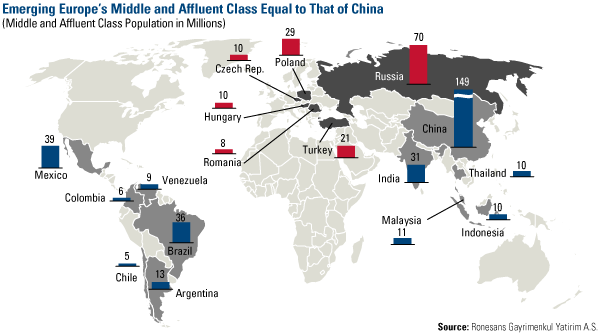
Raising Living Standards for 500 million people
Source - advisorperspectives.com
An estimated 500 million people in the developing world are expected to join the affluent in the developed world. 
The more affluent a person or community is, the more freshwater she and the community will consume.
China is by far the leader in adding people to its Middle Class, followed by Russia, Brazil, Mexico and India.
Why Seek Freshwater Abundance?
With more freshwater available we are confident that unavailability will no longer hold people back from their potential.  This is one reason why any freshwater scarcity is a concern. 

Saturday, April 28, 2012

Lot's of Freshwater, But NOT WHERE It's Needed

Precipitation, commonly called rain, the predominant source of freshwater, is more than enough for a 10+ billion human population plus the other species and nature's ecosystems that must have freshwater.
Rainfall
Source - countryofsb.org
From the very beginning, rain has supplied the freshwater needs of human, other species and nature's ecosystems in two ways: 
- Either, by dropping manna-from-the-heavens directly onto crops and where the freshwater was needed and/or 
- Replenishing lakes and other bodies tapped by humans, other freshwater species and nature's freshwater ecosystems.
Total Rainfall on land
Source - sciencemag.org
A total of 98,500 cubic kilometers of rain is estimated to fall on land every year.
This liquid precipitation is in addition to the 12,500 cubic kilometers that fall as ice and snow on land.
Ignoring for a minute that this rainfall in not geographically uniform and that it has extreme spacial and temporal variations, the 98,500 cubic kilometers/year
= 270 cubic kilometers/day
As 1 cubic kilometer = 264 billion US gallons,
the average rainfall of 270 cubic kilometers/day
= 71,280 billion US gallons/day
For a 10 billion human population (the projected human population in 2050), this rainfall
= 7,128 US gallons per day.
Why Freshwater Scarcity?
Ignoring freshwater accessed over long distances from surface bodies (lakes, rivers, etc) and underground aquifers, with so much rainfall available per person per day, why do we have scarcity anywhere in the world?
The answer: Scarcity is the result of rainfall not being uniform all over Earth's land mass and the unpredictable spacial and temporal variations of rainfall.

Saturday, April 21, 2012

Africa - The Not-so-DRY Continent!

The frequent photographs of parched African landscapes are familiar to all of us. Recent research tells a different story than the typical one of acute horrendous freshwater scarcity.
Accounting for Groundwater
A good map of underground aquifers has always existed for much of the world -except for Africa.
Freshwater availability projections for Africa have always omitted accounting for groundwater - till now.
Africa's Aquifers
Source - Environmental Research Letters Journal
Dated 19 April 2012
The productivity of Africa's aquifers has now been quantified.
Apparently there is a lot of water underground in much of Africa.
The orange and yellow areas, in the accompanying larger map, only cover 15-20% of the African continent, and identify aquifers with lowest expected productivity.
The blue and black colored areas are those with aquifers with the highest productivity.
In the smaller map, the same orange and yellow colors identify the worst condition i.e. the areas where the aquifers are the farthest underground.
Bottom Line
Underground aquifers contain:
1. More than 100 times the annual renewable freshwater resources, and
2. More than 20 times the freshwater stored in all of Africa'a lakes and other surface reservoirs


Now all we need to do is figure out a way to get this water to Africa's people who can drink it and use it for growing much-needed food.

Saturday, April 14, 2012

"Water Stress" Has Many Definitions

Just like the saying "Beauty is in the eyes of the beholder", Water Stress has different meanings around the globe. Remedying water-stress is difficult when few can agree on what the term means for all of them.
Water Stressed Areas
Source - news.bbc.co.uk
A large part of the world is experiencing stress on its water resources. Severely-stressed areas (red in the accompanying map) include Southwestern United States,  northern Mexico, Western and Eastern South America, vast portions of India, Northern China, much of Africa that surrounds the Sahara Desert, southern Africa and Australia (not shown)
Water stress, thus, is a fixture of both developed and developing countries

Water Stress in The Developing World
Boy Collecting Water
Source - sanakvo.org
In Asia and Africa, water stress is defined as lack of water for drinking and sanitation, both basic to human survival and good health.
This stress increases with income disparity for those in lower economic strata as the more affluent can get their water needs satisfied using their economic clout.
But even the affluent in the developing world suffer from water stress. Their stress arises from the ever-increasing water demand from production of goods and services that are the benchmarks defining someone as affluent.
Water Stress in The Developed World
Fountains in Las Vegas
Source -gothereguide.com
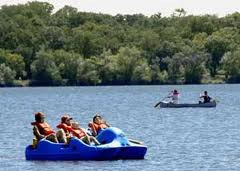
Water Recreation
Source - minneapolisparks.org
The inability to procure water needed to sustain economic growth and lifestyles is how water stress is defined in affluent countries.
Reducing Global Water Stress
So, it is difficult for all the world to agree on a common definition of water constitutes global water stress. And no globally supported effort can be defined and implemented to cut global water stress.The world's worsening water crisis, continues to further worsen.

Saturday, April 7, 2012

Every Water Is Not The Same!

We all are quite familiar with the salty taste of ocean water compared to water deposited by rain and water streaming out of a faucet. Another difference may help us tap on-demand, the oldest freshwater source on Earth.
The Ocean in the Atmosphere
The hydrologic cycle maintains and continuously replenishes a vast ocean of freshwater in the air closest to the ground. This ocean is the source of all rain and snow, the dew we find deposited on our cars, dew deposited on the ground early in the morning and the moisture that appears on the outside of a cold glass. 
Isotope Hydrology
Change in isotope content during the hydrologic cycle
Source - ANTSO.gov.au
It is an established fact that water from different sources contains different number and types of isotopes.(see post dated Oct 15, 2011).
Isotope Hydrology is the new science that uses existence of isotopes to estimate age and origin of water in each stage of the hydrologic cycle.
What makes Isotope Hydrology most interesting is that it can map a "local" hydrologic condition to include an identification of the the origin and content of water in the local atmosphere.
Predicting & Catalyzing Precipitation
The primary cause of freshwater scarcity is continued lack of rain where and when we humans want and need it. Precipitation (mostly rain) directly waters our food crops, adds runoff to increase river flows and lake levels, and replenishes ground water reservoirs.
We could soon produce rain on-demand using Isotope Hydrology that can accurately measure the isotopic content of local air, compare it to conditions that produce rain and identify what changes are necessary to produce rain on demand anywhere on Earth!

Saturday, March 31, 2012

Defining the Challenge Differently

Sometimes a challenge is overcome simply when the problem is defined differently - usually from a different perspective. Ongoing Climate Change research may guide us to efficiently extracting moisture from the air we breathe.
Carbon Dioxide Emissions
Source - scinewsblog.blogspot.com
The Common Perspective on Climate Change - Cut Carbon Dioxide Emissions
To counter climate change, our overwhelming focus in every industry is on reducing addition of carbon dioxide into the atmosphere
This reduction is achieved by "scrubbing" emissions to capture the carbon dioxide they contain.
Typically, the "scrubber" chemically removes carbon dioxide in the emission. When the scrubber eventually  'wears out, it is replaced with a new scrubber. The 'used up' scrubber is disposed or cleaned up and reused.
The extracted carbon dioxide can be stored or the carbon can be processed to create artificial fuels that supplement fossil fuels.
What if we supplemented our focus on only emission reduction with extraction of carbon dioxide that we have added into air?
An Uncommon Perspective - Pull Carbon Dioxide OUT from Air 
Photosynthesis
Source - en.wikipedia.org
Source - guardian.co.uk
This perspective acknowledges that we have put carbon dioxide into the air and defines the climate change challenge as one of taking carbon dioxide out of air.
Photosynthesis is nature's technique for extracting carbon dioxide from the air - a technique that is impractical for use by people because of the lead time required to seed, nurture and grow the number of plants required to c lean-up today's air.
So we are left with developing artificial techniques for pulling carbon dioxide out of the air. Furthermore, these extraction techniques have a value all their own, even when we reduce the additions: We need them to extract the carbon dioxide that we have already added into the air. 
Three private companies seeking to develop a technically and economically viable process to take carbon dioxide out from air are Climeworks, Kilimanjaro Energy and Carbon Engineering.
Composition of Air
The air (in the troposphere) is composed of the following:
Nitrogen (N2)78%
Oxygen (O2)            20%
Noble gasses1%
Carbon dioxide (CO2)0.03%
Water vapor (H2O)0.97%
Source - http://www.lenntech.com
There is much much more water than carbon dioxide in the air!
Defining freshwater as a supply issue or a demand issue
So, how can we define the challenge of freshwater scarcity differently? One way is to see the glass half empty and reducing. Another way is to see the glass as half full and filling.
Extracting moisture from the air is an example of the latter approach. This approach has a lot in common with extracting nitrogen from the air to make artificial manure (fertilizer) responsible for feeding much of the world today. It also has a lot in common with extracting carbon dioxide from the air to curb climate change and its impacts.

Saturday, March 24, 2012

WORLD WATER DAY March 22, 2012

The GOOD news

Source - guardian.co.uk
"Drinking Water Access" MDG
The Millennium Development Goal: Halve, by 2015, the proportion of people without sustainable access to safe drinking-water
Goal has been met ahead of schedule
By this measure:
(a) 89%  of the global population (6.1 billion people) had access to clean drinking water by 2010,
(b) 92% of the global population will have access to safe drinking water by 2015, and 
(c) Between 1990 and 2010, more than 2 billion people gained access to clean drinking water


The NOT-so-Good facts
1. An estimated 1.1 billion people still lack access to clean drinking water
2. 2.6 billion people don't have adequate sanitation
3. 1.8 billion people die every year from diseases associated with dirty water


A Global Crisis Looms
Source - 
1. The MDG goal assessment (above) becomes clearer when the details are closely reviewed.
- Sub-Saharan Africa and Oceania (the orange colored areas) are NOT on track to meet Global drinking water access goals.
- Data at the country level also hides many extended periods of drought in many countries including those in the developed world (e.g. in Southwest USA and in Eastern Australia)
2. More than 40% of the world's population will live in areas experiencing high stress by 2050 (Source: Organization for Economic Cooperation and Development)
3. An additional US$30 billion is needed to provide access to everyone
4. Considering only population growth, rainfall amounts per person have dropped precipitously e.g. rainfall in Pakistan provided 5,000 cubic meters of freshwater for each person in 1947. Rainfall provides less than 1,000 cubic meters for each person today.

A few other facts
1. Food production is the single consumer of freshwater supplies today - over 80% of available freshwater supplies in Asia are used for growing food.
2. China, India and the US use roughly one-third of the roughly 4,000 cubic kilometers of freshwater extracted globally each year - India uses approx 13%, China uses approx 12% while the US uses approx 9%. (source: Fourth World Water Development Report by UNESCO)
3. Food demand is expected to rise by 70% by 2050


The way forward
Technological Innovation or .....?

Saturday, March 17, 2012

Squirreling May Be Ideal Fix For Freshwater Scarcity

Freshwater scarcity exists when supplies and demand don't match. Freshwater is not unique in this regard - frequent shortages exist in everything at one time or another. Hoarding for days when supplies are scare is a well known tactic.
Squirrels and Food
Source - collectiblechildrensbook.com
We are all familiar with the tales of squirrels collecting acorns, apples, nuts and other food and storing them to last all winter when no food is easily to be found. The words 'squirreling a little something' imply that something is being saved for another day or time when it will not be as readily available
Many other animals follow this practice - Dogs hide bones to be eaten when no bones are available.


Local Freshwater Storage
Source - wilsonnc.org
Humans also have a long history of storing supplies to last a full season or during times of scarcity.
The commonly visible water tank collected water for small communities and served as a reservoir for members of the community to draw water from when needed.
Holding Ponds
Source - valleywater.org
Industrial and agricultural have holding ponds that they can access in time of reduced supplies.
Source - waterhearesexpert.com
In affluent homes all over the world we have water tanks now in each house to heat and store hot water. These tanks typically hold 30 gallons but can be as large as a 100 gallons. In emergency situations, like after an earthquake, these tanks can provide necessary drinking water for a few days.
Rooftop tanks
Source - hindu.com


Developing World Solution
In the third world, where water supply is available only a few hours a day for a few days a week, people have taken local storage to a new level by storing hundreds of gallons in rooftop tanks.
These rooftop tanks have in a way turned the local water supply utility into an intermittent supplier of water.


So why isn't "local storage" one of the solutions in our quiver to counter future water shortages everywhere in the world? All that needs done is to collect the quantity of water we need, individually or on a cooperative basis, adequate for the period over which we expect not to receive water supplies in the future?


Saturday, March 10, 2012

Water Resources impacted by Climate Change?

Implications of climate change on the Earth's Hydrologic Cycle are slowly coming into focus but the underlying phenomenon are still not well understood. Any assessment of climate change impact on water supplies are, thus, only our attempt to err on the 'safe' side for humanity and nature's ecosystems.


The Greenhouse Effect
Source - ucar.edu
If the greenhouse effect can be attributed to a single event, this event happened in 1988. Scientists, seeking to explain a series of unusually warm years, were able to link for the first time in 1988, the increase in atmospheric temperature to the retention of long-wave radiation (received in sunlight) in the atmosphere. Further research linked this increase in retention to an increase in greenhouse gasses that include Carbon dioxide, water vapor, nitrous oxide, methane and chlorofluorocarbons.
(As addition of carbon dioxide fuels increase in all the greenhouse gases, we are developing ways to reduce human carbon dioxide emissions)
Predicting Climate
We all know too well how difficult it still is for us to predict tomorrow's weather. 
Our difficulty is simply due to our lack of understanding on how the vast number of processes and their feedback cycles, come together to make the weather we experience.
Climate Change
As we don't really know how to predict the impacts of climate change, we have developed the approach of trying to understand (and model) historical data on temperature rises and the amount of greenhouse gases in the atmosphere. So, using the historical record as a 'given' we are measuring the increase in amount of greenhouse gases to assess what climate we should expect
Pinpointing Impacts of Climate Change
Climate change is expected to cause rapid changes in temperature, precipitation and concentrations of greenhouse gases (water and Carbon Dioxide). To predict the direction of these changes (i.e. will the result be a flood or a drought?) we make models to represent nature's complex ecosystems. The conclusions we reach are only as good (i.e. as closely representing the functioning of the ecosystem) as the models we can make.
Keeping in mind that our conclusions on the impact of climate change on water resources is only as good as the models we make, 

Rainfall is THE Concern
Source - loadstorm.com
Numerous computer model-based assessments have raised concerns of BIG changes in the amounts of rainfall.
  • In high latitudes areas (in equatorial Africa and Asia, in Southeast Asia) annual rainfall is projected to dramatically increase, while in mid-latitudes and in most subtropical regions rainfall is expected to decrease. 
  • A general reduction in precipitation of snow is expected to reduce the amount and duration of snow cover
Additional implications of reduced or unanticipated rainfall can also be postulated:
  • If we pollute more and more water, less rainfall implies that the concentration of pollutants in our water supply will remain higher longer
  • As we use an enormous volume of water to generate electricity and cool thermal power plants, any reduction in rainfall will only increase pressure on water supplies
  • Current levels of irrigated food production will have inadequate amounts of irrigation water (for example, in the dry US West) leading to reduction in food supplies - some studies predict a drop in USfood production by 30% for a 3 Degree Centigrate increase in air temperature.
  • And ..........
Maybe, the solution is to develop ways to extract both water vapor and carbon dioxide from the atmosphere!!


Saturday, March 3, 2012

Water Defines Climate Everwhere

Water in the troposphere, the atmosphere closest to the surface, conditions the Earth. In some locations water runs the local heating system while, at the same time, it acts as the cooling system in other locations. Water has an inordinately strong effect on climate. 


What is climate?
Climate Map
Source - blueplanetbiomes.org
Climate is weather averaged over a long period of time, usually, 30 years.
In this averaging, weather is defined by many variables. The predominant variables are temperature, precipitation and wind movement.


Temperature
Air Temperature Variations
Source - griffin.uga.edu
Temperature is a measure of the 'heat' in any location.
This 'heat' is the sum of the amount of energy deposited on a place by sunlight and the amount of energy existing on Earth at that place.
Water in the atmosphere and in surface bodies acts as the controller of heat distribution around the planet.
Water in the wind moves heat from one location to another.
Ice sheets and clouds cool the Earth's surface by reflecting the heat energy back into space.
Ocean and river currents transport heat to locations far and near.


Precipitation
Source - valdosta.edu
Precipitation IS water - in every form that water exists!


Water's Venetian Blind effect
Source - b4i.ie
Water in the air (with other greenhouse gasses like carbon dioxide) acts in much the same way as slats in a Venetian blind. 
The angle of each slat influences how much of the suns' heat and light enters a room. We can move the slats to form a 'closed' surface to, in effect, stop most light and heat from entering a room. We can fully 'open' the blinds to allow entry of the most amount of light and heat into a room.
In a similar way, nature manipulates the water content of air at individual locations (in conjunction with other parameters) to influence (raise and lower) in a very large way the temperature at a particular location.

Saturday, February 25, 2012

Am I Immune From Water Shortage?

Investing in real estate has always been about location, location, location. Water shortage too has a similar qualifier (all water problems and their solutions are local, local, local) that is compounded by the fact that no location is immune from water shortage.


A world rich in water - for some!
When currently used and  accessible water supplies are studied at a macro level, the conclusions might be:
- Approximately 50% of the world (the blue and grey areas in the map) does not have a water problem,
- If I reside in one of these water-adequate areas, I should not have to worry about water shortages, and
- If I live in the red, orange and green areas, I could experience water scarcity e.g.if I live in the southwest region of the US, then I could experience water shortages unless I have a way to transport water from outside to where I live or I choose to live in the vicinity of the right water transportation infrastructure.


The devil is in the details
Source - NRDC
A county-by-county map of the United states supports the macro-level conclusion that the southwest region of the of the US is prone to water shortages. However, assuming that predictions of Climate Change turn out to be accurate, the map says a lot more:
- 412 counties (marked in red) spread all over the US will experience water supply shortages and some of them are in water rich areas like Florida.
- Only 30% (929 out of 3141) counties would be immune from water shortages in the future i.e. the vast majority of the US population will need to deal with water scarcity by 2050. 


The water-immune are few in number!
Source - 


A map on global distribution of human population identifies that a very large percent of the global population will experience water shortage because of where they live.
In these areas, every city dweller knows that 24/7 supply of fresh water is unheard of today. Every city dweller also knows to plan their day around their need to stock up with water whenever it becomes available.

5.5 Billion people have experience with Water Shortage
80% have experience with water shortages
Image Source - atlas1. wikispaces.com
When the global population is tallied by where they live, nearly 80% of the people on Earth live on a near-daily basis with not having enough safe freshwater when they need or want it.
Faced with freshwater shortage, their options range between:
- Adopting the resigned attitude that justifies using unsafe readily-available water, and
- Arranging their daily schedule around the gathering of necessary amounts of safe freshwater.
For these 5.5 billion, water is a personal local challenge.
- The remaining 20%, nearly 1.5 billion people, mostly have water for the taking whenever they so desire. 


Saturday, February 18, 2012

Can Motion Assist in Changing Water Vapor Into Liquid Water?

Water differs from every other resource (except, maybe, air) in that water is the only resource that needs motion to maintain its authenticity. Water's need to be in motion is so great that water seems self-driven to move - movement is ingrained in water; talking about water implies talking about something that is always moving.
Still Waters Run Deep
Rocks revealed in a flowing river
Source - alaska-in-pictures.com
Still Water
Source - me.ncrs.usda.org
This proverb commonly means that a person showing a calm exterior should be handled with caution because the calmness does not reveal anything (positive or negative; good or bad; liked or disliked) about that person. This proverb's origin is the observation that moving water reveals a lot about what's in the water while stagnant water does not reveal any information and, thus, anything dangerous will not be known.
Stagnant water
Source - warrencountymosquito.org
Stagnant water holds a severe risk to health of humans. Living hazards (to humans) breed profusely in water that is not in motion.
We seem to be programmed to avoid stagnant water through its impact on our senses: stagnant water is cloudy and we cannot see what's in it; stagnant water has a foul smell; We can also usually see dirt and debris on the surface of a body of stagnant water
Whirlpools
Water never moves in a straight line especially when flowing through narrow paths. Water molecules seem to fight each other to move into the space that a molecule in front of them vacates as it moves forward. 
A top view of a Whirlpool
Source - dailymail.co.uk
This "fight" between water molecules, to move into the vacant space before them, somehow initiates the spinning motion unique to a whirlpool. Whirlpools occur in lakes, in rivers, in virtually every body of water. All that is required is for the water to be moving. This movement most commonly occurs under the influence of gravity.
A Whirlpool as it appears from below
Source - spiralwishingwells.com
And doesn't the underside of a whirlpool look too much like a tornado?
Moving between States
Motion Changes Water between solid,liquid and vapor
Source - rmbel.info
Earth's Water Cycle uses motion to transform water between its three states: solid, liquid and vapor. 


Can we utilize movement to change water vapor in the air we breathe into liquid form whenever and wherever we choose to do so?

Saturday, February 11, 2012

Can Biology Show Us How To Make New Water?

We accomplish what we convince ourselves to believe can be accomplished by us. Could we apply this maxim to increase water supplies through the development of a way to make NEW water?


Freshwater supply
The Earth from Space
Source - filterspurewater.com
Everybody in the water supply business "knows" three facts as forever being true:
1. The total amount of water on Earth is constant. 
2. Only a tiny amount of the total water is freshwater
3. Water is never destroyed like other natural resources are, e.g. oil is lost for ever when we use it. All our oil consumption process leaves us with are by-products that we cannot reassemble into oil.
The net result of this knowledge is that we don't try to make new water and we ridicule those who might propose manufacture of new water.
A Shift in Thinking!
What if the first two facts were seen and accepted as not being completely true? What if someone convinced us that they are not true? What if someone promised to pay us if we showed that they are not true? What if some of us convinced ourselves that we can indeed make water?
What if we simply concluded that the reason why we think that water cannot be manufactured is that no human seems to have figured out how to do it? or has been motivated enough to try to find a way to do it?
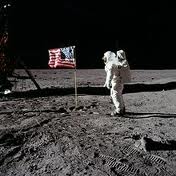
Man on the Moon
Source - en.wikipedia.org
Then our challenge is clear: We need to tell ourselves that we can make water and set ouralves on the journey to figure out a way!
Map of a Genome
Source - life.illinois.edu
Isn't this the same kind of shift in thinking that made it possible for man to walk on the moon? or map the genome of so many species? or accomplish the many other things that define our life today, like the Internet, mobile phones, the Global Positioning System (GPS) and all the other inventions we cannot seem to want to do without.

Metabolic Water
Metabolic water is our name for water that is made inside every living organism from the chemical reactions the organism uses to utilize food it eats.
The average human body produces between 350-400 ml per day of water. This water differs from the freshwater in streams and lakes only in the content of its dissolved substances - the most important of which are dissolved ions. The process of metabolism - oxidation of glucose derived from food - produces this NEW 350-400 ml of water in a day.
Nobody seems to know why the body does not or cannot produce New Water in larger amounts. What the scientific literature does reveal is that the human body is capable, under certain conditions, to produce more metabolic water e.g. when stressed as a result of a rigorous exercise regime
What if we said "we can!"
Do we really and truly know and understand "how" the human body and other living organism's make water from food they eat? If the answer is "yes, we know how" and if we passionately believe that we must find a way to synthetically replicate this process, then we will make the way real!
Biology as Technology
We know of a way! We know of a biological process that makes new freshwater!!!!! ... in quantity.
Biology is the technology that can provide us the way to accomplish what we cannot accomplish through physics or chemistry (see post dated November 2010)

Saturday, February 4, 2012

Water Molecules React to Frequency of Microwaves

A singular property of water molecules is that they get excited (i.e. start moving) when hit with microwaves. Microwave ovens use this knowledge about water to cook food.


Microwaves
Light Waves
Source - chemwiki.ucdavis.edu
Microwaves are light waves with a wavelength of between 1 mm and 1 meter.
They carry a lot less energy than radio waves and are much less lethal than X-rays.
The frequency of microwaves is just right for water molecules, which absorb the energy in microwaves.
This absorption raises the temperature of water. Microwaves can raise water temperature to water's boiling point.
Microwave Ovens
A Microwave Oven
Source - globalmicrowave.org
These ovens raise the temperature of water in the food placed in the oven, and the heated water helps cook the food.
Microwaves are generally not strong enough to raise temperature of food molecules.
Microwave ovens are designed to spread microwaves evenly all over the food so that waves supply energy distributed equally within the volume of an oven.
Unevenly Cooked or Heated food
A common complaint about microwave oven cooking is that the food we heat or cook in it does not heat or cook evenly throughout. 
Water is the cause of uneven heating and cooking.
As microwaves only heat up water molecules, if these water molecules are not evenly dispersed in the food, the food heats up differently in different places, for example:
- Microwaved soup has a hot layer on top and a cold center. The hot layer on top is the result of the uppermost water particles getting heated the most because they absorb much of the microwave energy before the waves can penetrate deeper into the body of the soup.
- Sometimes the middle of food is cooked "first" in a microwave oven because there is a larger concentration of water molecules in the middle of many foods. The moist center heats up first and longer.
- Foods, dry of moisture, like cornflakes rice or pasta are difficult to cook in a microwave because these foods have little moisture that microwaves can heat up.
- Breads get hard in a microwave oven because microwaves evaporates the little moisture contained in bread and, thus, dry the bread into a hard crust.
Invention of the Microwave Oven
Dr Percy Spencer
Source - Gallawa.com
The original name for microwave ovens was Radarange.

An engineer, Dr Percy Spencer, discovered the impact of microwaves while he was developing radar technology that converts electricity into microwaves.
Dr. Spencer's employer, Raytheon, commercialized microwave ovens and sold the first one in 1947.
Today, 90 percent of US homes have a microwave oven.